
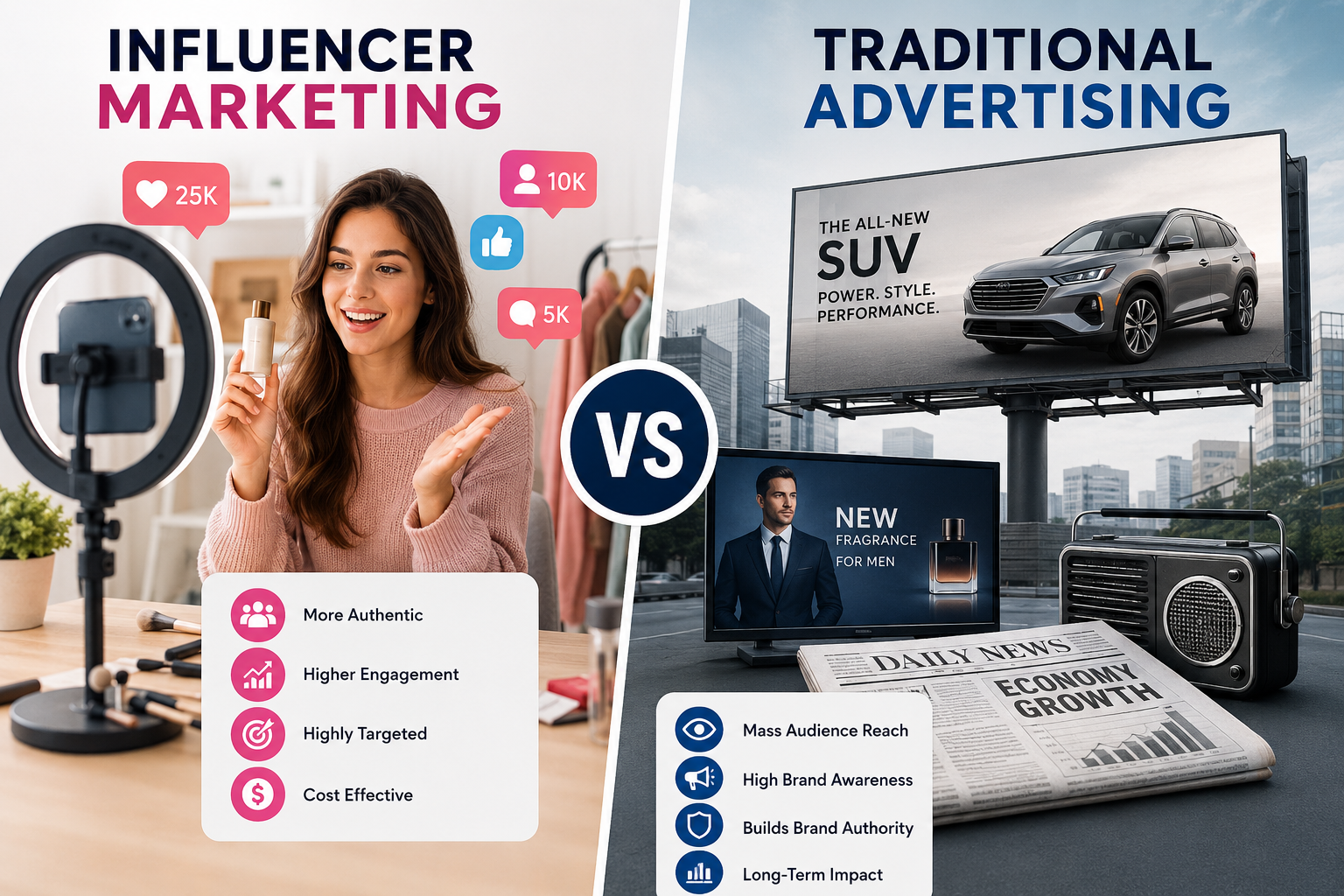
In today’s fast-moving digital world, brands are constantly searching for smarter ways to reach customers. Two major strategies dominate the marketing industry: Influencer Marketing and Traditional Advertising. But which one truly delivers better results in 2026?
The answer depends on your audience, goals, budget, and brand identity. Let’s compare both marketing methods and discover which one is winning the modern advertising battle.
What Is Influencer Marketing?
Influencer marketing is a strategy where brands collaborate with social media creators to promote products or services. These influencers already have loyal audiences on platforms like Instagram, TikTok, YouTube, and LinkedIn.
Instead of directly selling products, influencers create engaging and relatable content that feels more natural and trustworthy.
Popular Influencer Platforms
- Instagram Reels
- TikTok Videos
- YouTube Shorts
- Podcasts
- LinkedIn Content
- Twitch Streaming
What Is Traditional Advertising?
Traditional advertising includes classic promotional methods such as:
- Television commercials
- Radio ads
- Newspaper advertising
- Billboards
- Magazine promotions
- Print media campaigns
These methods have been used for decades to build brand awareness and reach mass audiences.
Influencer Marketing vs Traditional Advertising
1. Audience Trust
Influencer Marketing
People trust recommendations from creators they follow daily. Influencers feel more personal and authentic compared to branded commercials.
Result: Higher engagement and stronger customer relationships.
Traditional Advertising
Consumers often skip TV ads, ignore banners, or use ad blockers online.
Result: Lower trust among younger audiences.
Winner: Influencer Marketing
2. Cost Effectiveness
Influencer Marketing
Brands can start with micro-influencers at affordable budgets while still getting strong engagement.
Traditional Advertising
TV commercials, billboards, and print campaigns usually require huge production and placement costs.
Winner: Influencer Marketing
3. Brand Awareness
Traditional Advertising
Traditional media still reaches massive audiences quickly, especially during sports events, TV shows, and public campaigns.
Influencer Marketing
Influencer campaigns are more targeted but may not achieve instant nationwide exposure.
Winner: Traditional Advertising
4. Engagement & Interaction
Influencer Marketing
Users can like, comment, share, save, and directly interact with creators.
Traditional Advertising
Traditional ads are mostly one-way communication.
Winner: Influencer Marketing
5. Targeting Capabilities
Influencer Marketing
Brands can target specific niches such as:
- Fitness lovers
- Gamers
- Fashion enthusiasts
- Tech audiences
- Beauty communities
Traditional Advertising
Targeting is broader and less personalized.
Winner: Influencer Marketing
6. Long-Term Brand Authority
Traditional Advertising
Big TV campaigns and billboards still create strong authority and prestige for luxury or global brands.
Influencer Marketing
Influencer trends can change quickly, and creator reputation risks may affect brands.
Winner: Traditional Advertising
Why Influencer Marketing Is Growing Faster
Modern consumers prefer:
- Authentic recommendations
- Relatable creators
- Short-form video content
- Real product experiences
Gen Z and Millennials especially trust creators more than celebrity commercials.
Brands like Nike, Sephora, Gymshark, and Apple successfully combine influencer campaigns with digital storytelling to drive millions in sales.
The Best Strategy: Combine Both
The smartest brands in 2026 don’t choose only one strategy — they combine both.
Example:
- Use TV ads for mass awareness
- Use influencers for engagement and conversions
- Use social media ads for retargeting
This creates a full marketing ecosystem.
Final Verdict: Which Wins?
If your goal is:
- Trust
- Engagement
- Affordable growth
- Targeted audiences
→ Influencer Marketing wins.
If your goal is:
- Mass visibility
- Brand authority
- Large-scale awareness
→ Traditional Advertising still matters.
Overall Winner in 2026:
Influencer Marketing
Because modern consumers value authenticity more than interruption-based advertising.
Conclusion
Marketing is evolving rapidly, and brands must adapt to changing consumer behavior. Influencer marketing has become one of the most powerful tools for building trust, increasing engagement, and driving online sales.
However, traditional advertising still plays an important role in creating large-scale brand recognition.
The future belongs to brands that successfully blend creativity, technology, and human connection.