
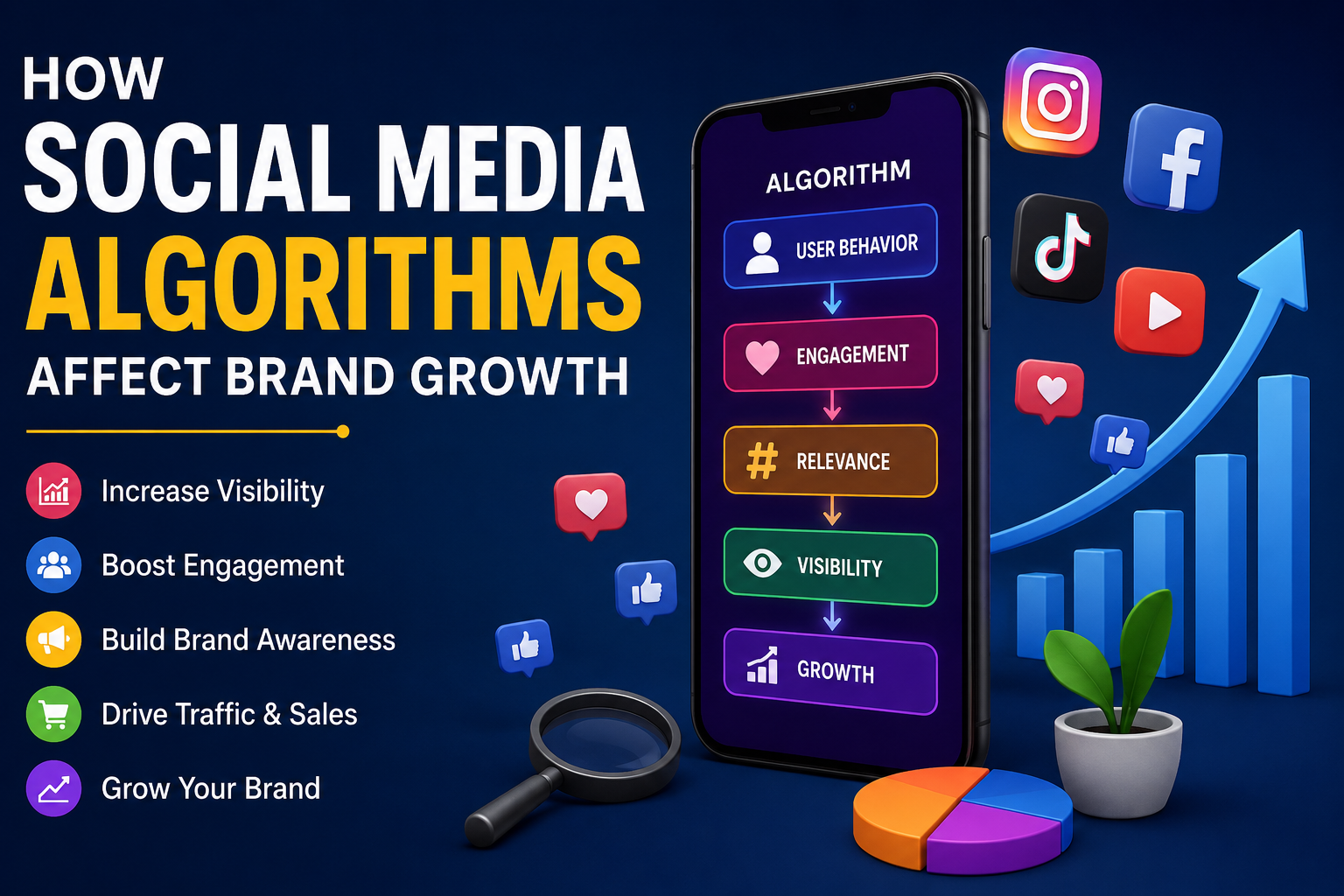
Social media algorithms have become one of the most powerful forces in digital marketing. Whether a brand is posting on Instagram, TikTok, YouTube, Facebook, or LinkedIn, algorithms decide who sees the content, how often it appears, and how much engagement it receives. For businesses, understanding these algorithms is no longer optional — it is essential for growth.
What Is a Social Media Algorithm?
A social media algorithm is a system that platforms use to organize and prioritize content for users. Instead of showing posts in chronological order, platforms analyze user behavior and display content that users are most likely to engage with.
Algorithms consider factors such as:
- Likes and comments
- Watch time
- Shares and saves
- Posting consistency
- User interests
- Content quality
- Relevance and trends
The main goal of every platform is to keep users active for longer periods, so the algorithm rewards engaging content.
Why Algorithms Matter for Brands
Algorithms directly influence a brand’s visibility. Even high-quality products can struggle if content fails to perform well in the algorithm system.
A strong algorithm strategy can help brands:
- Reach larger audiences organically
- Build stronger engagement
- Increase website traffic
- Generate leads and sales
- Improve brand awareness
- Create loyal communities
Brands that understand platform behavior often grow faster than competitors using traditional marketing methods.
How Different Platforms Use Algorithms
Instagram prioritizes:
- Reels with high watch time
- Saves and shares
- Consistent engagement
- Trending audio and formats
Brands using short-form videos and visually attractive content usually perform better.
TikTok
TikTok’s algorithm focuses heavily on:
- Viewer retention
- Video completion rate
- Trending topics
- Fast engagement
Even small brands can go viral if content is entertaining and relatable.
YouTube
YouTube rewards:
- Watch time
- Click-through rate
- Audience retention
- Consistent uploads
Educational and storytelling content often performs well over time.
LinkedIn prioritizes:
- Professional value
- Conversations in comments
- Industry relevance
- Thought leadership content
B2B brands benefit greatly from informative posts and personal branding.
The Positive Impact on Brand Growth
1. Organic Reach Opportunities
Algorithms allow smaller brands to compete with larger companies. A creative post can reach millions without spending heavily on ads.
2. Better Audience Targeting
Platforms learn user behavior and show content to people genuinely interested in it. This increases conversion potential.
3. Faster Brand Recognition
Consistent viral or engaging content helps brands become recognizable quickly.
4. Community Building
Algorithms favor content that creates interaction. Brands that engage with followers build stronger customer loyalty.
The Challenges Brands Face
Declining Organic Reach
Many platforms reduce organic visibility over time to encourage paid advertising.
Constant Algorithm Changes
Social media platforms frequently update their systems, making it difficult for brands to maintain stable performance.
Content Saturation
Millions of posts are uploaded daily, increasing competition for attention.
Pressure to Create Constant Content
Brands must consistently produce high-quality content to remain visible.
Strategies to Grow Despite Algorithm Changes
Create High-Retention Content
Focus on hooks, storytelling, and visual quality to keep viewers engaged.
Use Short-Form Video
Reels, Shorts, and TikToks currently receive strong algorithm support.
Encourage Interaction
Ask questions, create polls, and invite comments to boost engagement signals.
Post Consistently
Regular posting helps algorithms understand your activity and audience relevance.
Follow Trends Carefully
Using trending audio, topics, and formats can improve visibility when aligned with brand identity.
Analyze Insights
Use platform analytics to understand what content performs best.
The Future of Social Media Algorithms
AI-powered algorithms are becoming smarter every year. Future systems will likely focus more on:
- Personalized experiences
- AI-generated recommendations
- Interactive content
- Voice and visual search
- User behavior prediction
Brands that adapt quickly to new technologies and audience preferences will have a competitive advantage.
Conclusion
Social media algorithms have completely transformed modern marketing. They determine which brands get attention and which remain invisible. While algorithms can be unpredictable, brands that focus on valuable content, authenticity, creativity, and audience engagement can achieve massive growth organically.
In today’s digital world, understanding algorithms is not just a marketing skill — it is a business growth strategy.