
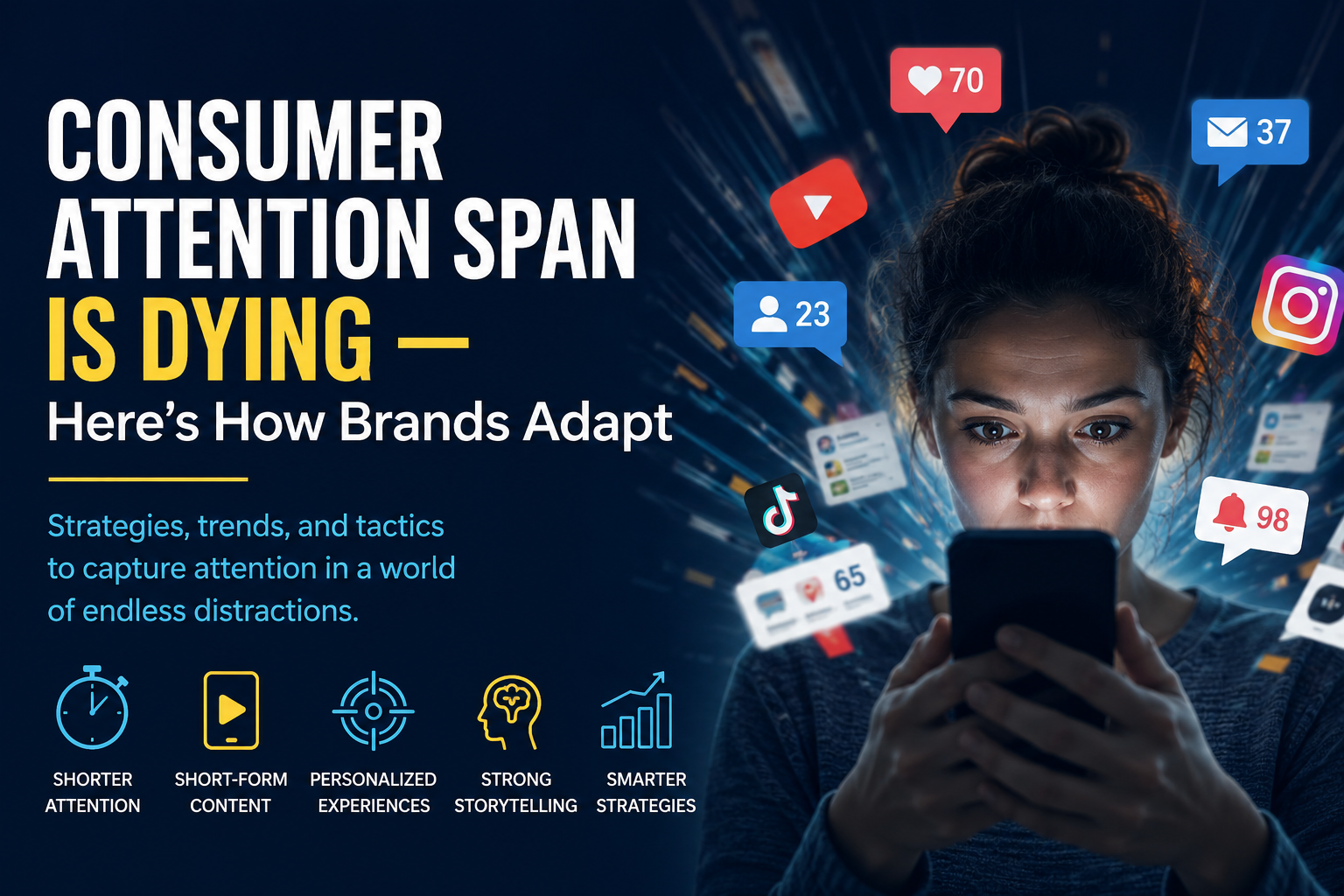
In today’s digital world, attention has become the most valuable currency. Consumers are exposed to thousands of marketing messages every day—on social media, websites, streaming platforms, mobile apps, and even smart devices. As a result, the average attention span is shrinking, making it increasingly difficult for brands to capture and retain consumer interest.
For marketers and advertisers, this presents both a challenge and an opportunity. Brands that understand how modern consumers engage with content can create experiences that stand out, drive engagement, and ultimately increase conversions.
The Attention Economy: Why It Matters
The modern consumer lives in a constant state of information overload. Every scroll, swipe, and click introduces new content competing for attention. Social media platforms are designed to keep users engaged with endless streams of videos, images, and updates.
Because consumers have more choices than ever, they make decisions quickly. If content doesn’t grab attention immediately, it is often ignored within seconds.
This shift has transformed marketing from a battle of budgets into a battle for attention.
What Is Causing Shorter Attention Spans?
1. Content Overload
Every day, millions of pieces of content are published online. Consumers simply cannot process everything they see, forcing them to filter information rapidly.
2. Short-Form Video Dominance
Platforms like TikTok, Instagram Reels, and YouTube Shorts have conditioned users to consume content in quick bursts.
3. Multi-Tasking Behavior
Consumers frequently switch between apps, devices, and tasks. Watching a video while texting, shopping, and browsing social media has become normal behavior.
4. Instant Gratification
Modern technology has trained people to expect immediate results. Long loading times, complicated interfaces, or lengthy advertisements often lead to abandonment.
How Consumer Behavior Has Changed
Today’s consumers:
- Scroll faster
- Read less
- Watch shorter videos
- Make quicker judgments
- Expect personalized experiences
- Prefer visual content over text-heavy messages
Brands can no longer rely on lengthy explanations to communicate value. The message must be clear, relevant, and engaging from the very first interaction.
How Successful Brands Are Adapting
1. Winning the First Three Seconds
The opening moments of any advertisement are now critical.
Successful brands use:
- Bold visuals
- Strong headlines
- Surprising elements
- Emotional triggers
- Clear value propositions
The goal is simple: stop the scroll.
Instead of slowly introducing a product, brands immediately show the outcome, benefit, or transformation.
2. Prioritizing Short-Form Content
Short-form videos have become one of the most effective marketing formats.
Popular content types include:
- Product demonstrations
- Before-and-after transformations
- Quick tutorials
- Behind-the-scenes content
- Customer testimonials
The best-performing videos often communicate their core message within the first few seconds.
3. Simplifying Brand Messages
Complex marketing messages create friction.
Modern brands focus on:
- One key message
- One primary benefit
- One clear call-to-action
When consumers understand a message instantly, engagement increases.
4. Using Visual Storytelling
Humans process visuals faster than text.
Strong visual storytelling includes:
- Consistent brand colors
- Memorable imagery
- Clear design hierarchy
- Motion graphics
- Engaging video content
This is why great design has become a competitive advantage in modern advertising.
5. Personalization at Scale
Consumers expect brands to understand their needs.
Personalized marketing can include:
- Product recommendations
- Location-based offers
- Behavioral targeting
- Dynamic advertisements
- Customized email campaigns
Relevant content naturally captures more attention than generic messaging.
6. Creating Interactive Experiences
Interactive content encourages participation rather than passive consumption.
Examples include:
- Polls
- Quizzes
- Live streams
- Augmented reality experiences
- Interactive advertisements
The more involved consumers become, the longer they stay engaged.
7. Building Strong Brand Recognition
When attention is limited, familiarity becomes powerful.
Brands with strong visual identities can be recognized instantly through:
- Logos
- Colors
- Typography
- Packaging
- Brand voice
Consumers often make purchasing decisions based on recognition and trust rather than extensive research.
The Role of AI in Capturing Attention
Artificial intelligence is helping brands deliver more relevant content than ever before.
AI-powered marketing tools can:
- Analyze consumer behavior
- Predict interests
- Optimize ad placements
- Personalize messaging
- Improve targeting accuracy
As attention becomes scarcer, relevance becomes increasingly important.
The Future of Marketing in an Attention-Starved World
The brands that succeed in the future will not necessarily be the loudest—they will be the most relevant.
Consumers don’t want more content. They want better content.
Winning brands will focus on:
- Faster communication
- Stronger storytelling
- Better design
- Personalized experiences
- Authentic connections
The ability to capture attention quickly and provide immediate value will become one of the most important skills in marketing and advertising.
Conclusion
Consumer attention spans may be shrinking, but opportunities for brands are growing. The challenge is no longer simply reaching people—it’s keeping them engaged long enough to make an impact.
Brands that embrace short-form content, compelling visuals, personalization, and clear messaging will be better positioned to thrive in the modern attention economy.
In a world where every second counts, the brands that earn attention—not demand it—will be the ones that win.