
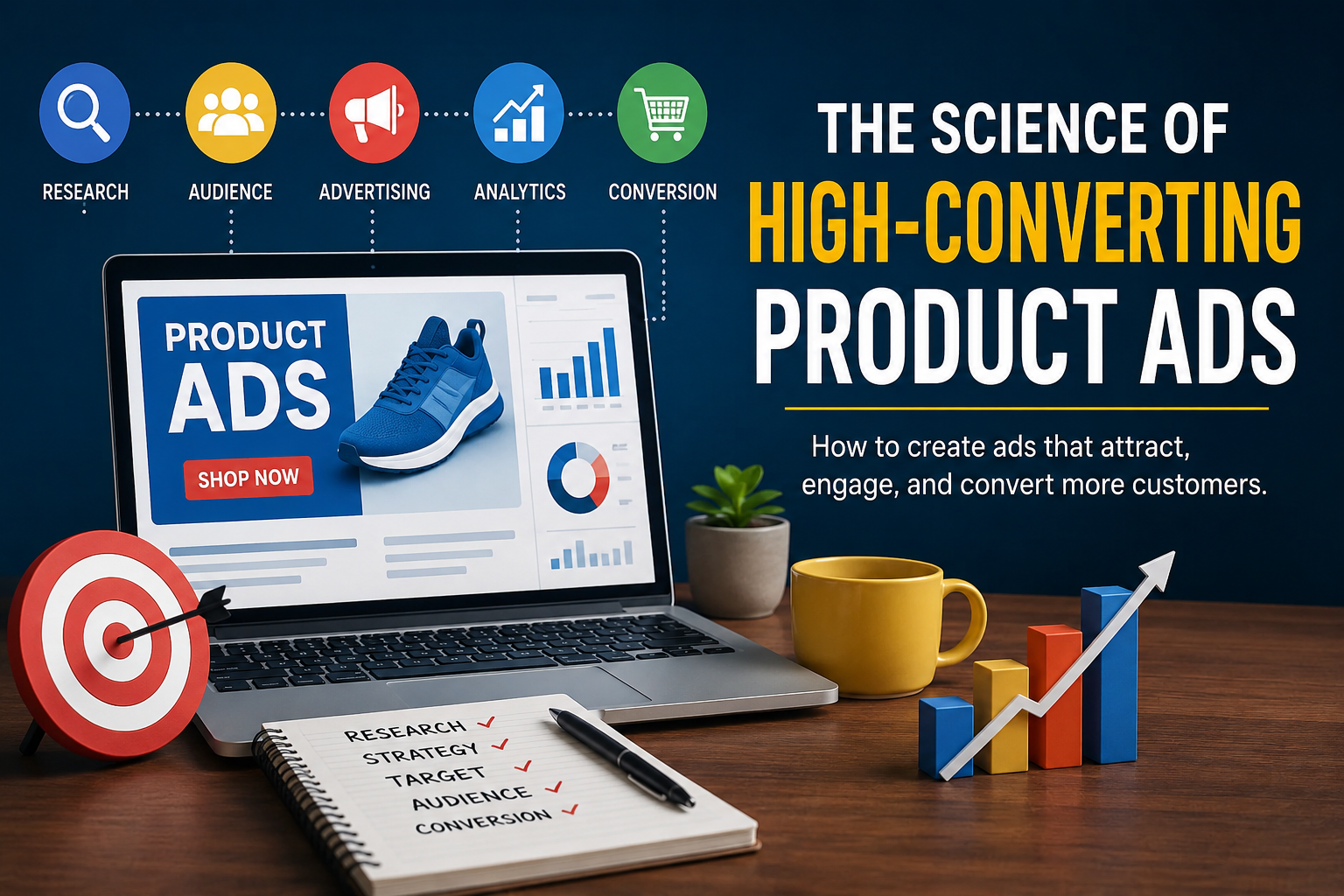
Why Some Ads Sell While Others Fail
Every day, consumers are exposed to thousands of advertisements. Yet only a handful capture attention, create interest, and motivate action. The difference isn’t luck—it’s science. High-converting product ads are built on a deep understanding of human psychology, consumer behavior, and persuasive communication.
This article explores the key principles behind ads that consistently generate clicks, leads, and sales.
1. Attention Is the First Battle
Before an ad can persuade, it must be noticed.
Research shows that people make split-second decisions about whether content is worth their attention. Successful advertisers use:
- Bold visuals
- Contrasting colors
- Unusual imagery
- Compelling headlines
- Motion and animation
A strong hook immediately answers the question: “Why should I care?”
Example:
Instead of:
“Introducing our new fitness watch.”
Use:
“Track Your Health Like a Pro—Without Spending a Fortune.”
The second headline creates curiosity and highlights a clear benefit.
2. Emotions Drive Purchasing Decisions
Many consumers believe they make logical buying decisions. In reality, emotions heavily influence purchasing behavior.
High-converting ads often trigger emotions such as:
- Happiness
- Excitement
- Trust
- Fear of missing out (FOMO)
- Security
- Belonging
People buy because of emotion and justify their decisions with logic afterward.
Example:
A travel company doesn’t sell flights; it sells adventure, freedom, and unforgettable memories.
3. Focus on Benefits, Not Features
One of the biggest advertising mistakes is emphasizing product features instead of customer benefits.
Feature:
“Battery lasts 24 hours.”
Benefit:
“Stay connected all day without worrying about charging.”
Customers care more about how a product improves their lives than about technical specifications.
4. Social Proof Builds Trust
Humans naturally look to others when making decisions.
That’s why high-performing ads often include:
- Customer reviews
- Testimonials
- User-generated content
- Ratings and awards
- Usage statistics
Example:
“Trusted by over 500,000 customers worldwide.”
This reduces uncertainty and increases credibility.
5. Simplicity Increases Conversions
Many ads fail because they try to communicate too much at once.
Effective ads focus on:
- One message
- One audience
- One call-to-action
The easier an ad is to understand, the more likely consumers are to act.
The Rule:
If someone can’t understand your ad within five seconds, it’s probably too complicated.
6. Strong Visual Hierarchy Guides Attention
Great advertisements direct viewers’ eyes exactly where marketers want them to look.
A typical visual flow:
- Headline
- Product image
- Key benefit
- Call-to-action
This structure reduces cognitive effort and improves engagement.
7. Scarcity Creates Urgency
People place greater value on things that appear limited.
Common scarcity tactics include:
- Limited-time offers
- Exclusive releases
- Low-stock notifications
- Seasonal promotions
Example:
“Only 48 Hours Left to Save 30%.”
Urgency encourages faster decision-making and reduces procrastination.
8. The Power of a Clear Call-to-Action
Even a perfectly designed ad can fail if the next step isn’t obvious.
Effective CTAs are:
- Direct
- Action-oriented
- Benefit-driven
Examples include:
- Shop Now
- Get Your Free Trial
- Claim Your Discount
- Start Saving Today
A strong CTA removes uncertainty and guides the customer toward conversion.
9. Personalization Improves Performance
Modern consumers expect relevant experiences.
Personalized ads often outperform generic campaigns because they address:
- Specific interests
- Demographics
- Behaviors
- Purchase history
When customers feel understood, engagement and conversion rates typically increase.
10. Testing Is the Secret Weapon
The highest-converting ads are rarely created on the first attempt.
Successful marketers continuously test:
- Headlines
- Images
- CTAs
- Landing pages
- Ad copy
Even small improvements can significantly increase return on investment over time.
Conclusion
High-converting product ads are not created by chance. They are built using proven principles of psychology, design, and consumer behavior. By capturing attention, triggering emotion, highlighting benefits, leveraging social proof, and maintaining simplicity, brands can create advertisements that not only attract viewers but also convert them into loyal customers.
The science of advertising is ultimately about understanding people. The better marketers understand what motivates their audience, the more effective their campaigns become.
Key Takeaway: The best ads don’t simply sell products—they solve problems, evoke emotions, and make taking action feel like the natural next step.