
Why Beautiful Visuals Alone Don’t Build Successful Brands
In today’s digital world, businesses invest heavily in logos, social media posts, websites, and advertisements to attract customers. Many people believe that if a design looks beautiful, it will automatically generate sales and build a strong brand. However, great design and great marketing are two different things. While they work together, each serves a unique purpose.
Understanding the difference between good design and good marketing can help businesses create stronger brands, better customer experiences, and more effective campaigns.
What Is Good Design?
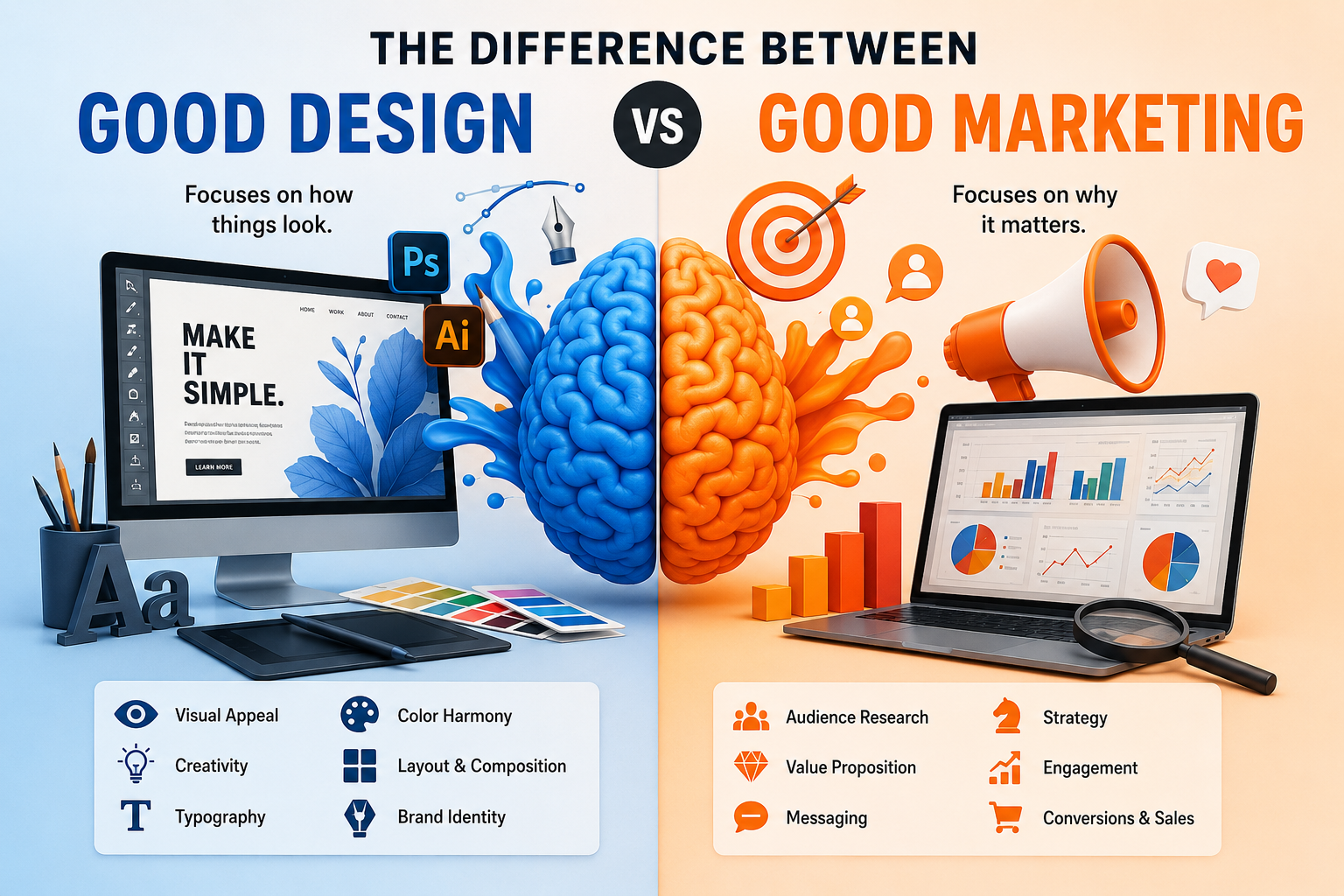
Good design is about communication through visuals. It focuses on creating aesthetically pleasing, functional, and memorable experiences that represent a brand’s identity.
A well-designed product, website, or advertisement should:
- Be visually appealing
- Maintain consistency across platforms
- Communicate information clearly
- Create an emotional connection
- Enhance user experience
- Reflect the brand’s personality
Good design makes people stop scrolling, notice a product, and remember a brand.
The Purpose of Design
Design answers the question:
“How should this look and feel?”
Whether it’s a logo, packaging, website, or social media post, designers focus on typography, color psychology, composition, imagery, and user experience to create something meaningful and attractive.
For example, luxury brands often use minimal layouts, elegant typography, and premium colors like black, white, and gold to communicate exclusivity and sophistication.
What Is Good Marketing?
Marketing is the process of understanding customer needs and persuading them to take action.
Good marketing focuses on:
- Identifying target audiences
- Solving customer problems
- Building trust
- Creating demand
- Generating leads and sales
- Developing long-term customer relationships
Marketing answers the question:
“Why should people care about this?”
A successful marketing strategy understands consumer psychology and delivers the right message to the right audience at the right time.
The Fundamental Difference
The simplest way to understand the distinction is:
Design attracts attention, while marketing drives action.
Design creates the visual experience.
Marketing creates the business results.
A beautifully designed advertisement may fail if it speaks to the wrong audience. Similarly, a simple advertisement with a powerful marketing message can generate millions in revenue.
Good Design Without Good Marketing
Many businesses invest in premium branding and stunning visuals but struggle to make sales.
Why?
Because good design alone cannot solve problems such as:
- Poor product-market fit
- Wrong target audience
- Weak messaging
- Ineffective distribution channels
- Lack of customer trust
Imagine opening a luxury coffee shop with beautiful branding and interior design, but promoting it to people who prefer budget options. The design may be excellent, but the marketing strategy fails to connect with the right customers.
The result:
Beautiful brand. Poor sales.
Good Marketing Without Good Design
On the other hand, some companies achieve massive success despite having simple or average visual design.
Their strength lies in:
- Strong storytelling
- Clear value propositions
- Effective audience targeting
- Emotional messaging
- Consistent communication
Customers buy solutions to problems, not just attractive visuals.
However, poor design eventually becomes a limitation. It can reduce trust, weaken brand recognition, and create a less professional image.
Marketing may bring customers in, but design helps keep them engaged.
Why Design and Marketing Need Each Other
The most successful brands combine both disciplines seamlessly.
Design and marketing work together to create:
Brand Recognition
Consistent visual identity makes a brand memorable, while marketing ensures people repeatedly encounter that identity.
Customer Trust
Professional design increases credibility, and effective marketing builds relationships over time.
Emotional Connection
Design creates emotional experiences through colors, imagery, and aesthetics. Marketing strengthens those emotions through storytelling and messaging.
Higher Conversion Rates
Beautiful visuals attract attention, but persuasive marketing encourages customers to take action.
When both elements align, businesses achieve sustainable growth.
Real-World Examples
Apple
Apple is a perfect example of combining exceptional design with world-class marketing.
Their products feature minimalist aesthetics and intuitive user experiences, while their marketing focuses on innovation, simplicity, and lifestyle benefits rather than technical specifications.
Customers don’t simply buy technology—they buy an experience and a vision.
Nike
Nike’s visual identity is simple and iconic.
However, its true power comes from marketing. Campaigns like “Just Do It” connect emotionally with consumers by focusing on ambition, determination, and personal achievement.
The design supports the message, but the marketing creates the movement.
Coca-Cola
Coca-Cola has maintained consistent branding for decades, but its success stems from emotional marketing that associates the product with happiness, family, and celebration.
The red logo is memorable, yet the stories behind the brand drive customer loyalty.
Common Mistakes Businesses Make
Many companies misunderstand the relationship between design and marketing.
Mistake 1: Prioritizing Looks Over Strategy
Beautiful visuals without clear objectives rarely generate meaningful results.
Businesses should first understand their audience, positioning, and messaging before investing heavily in design.
Mistake 2: Ignoring Brand Consistency
Design consistency strengthens marketing efforts.
Using different colors, fonts, and visual styles across platforms creates confusion and weakens brand recognition.
Mistake 3: Forgetting Customer Needs
Both designers and marketers should focus on customer problems rather than personal preferences.
What looks attractive to a business owner may not resonate with potential customers.
The Future: Design and Marketing in the AI Era
Artificial intelligence is changing both industries rapidly.
AI tools now help businesses:
- Generate ad creatives
- Write marketing copy
- Create brand assets
- Analyze consumer behavior
- Personalize campaigns
- Optimize advertising performance
However, technology cannot replace human creativity, empathy, and strategic thinking.
The future belongs to professionals who understand how design and marketing complement one another rather than treating them as separate disciplines.
Conclusion
Good design and good marketing are not competitors—they are partners.
Design creates the visual language of a brand, while marketing gives that language purpose and direction.
A beautiful brand without strategy struggles to grow.
A powerful marketing strategy without strong design struggles to build long-term trust.
The businesses that succeed understand that great brands are built when creativity meets strategy.
In the end, good design makes people notice you, but good marketing gives them a reason to stay.
Meta Title: The Difference Between Good Design and Good Marketing | Complete Guide 2026
Meta Description: Discover the key differences between good design and good marketing, why both matter for business growth, and how successful brands combine creativity with strategy to drive results.