
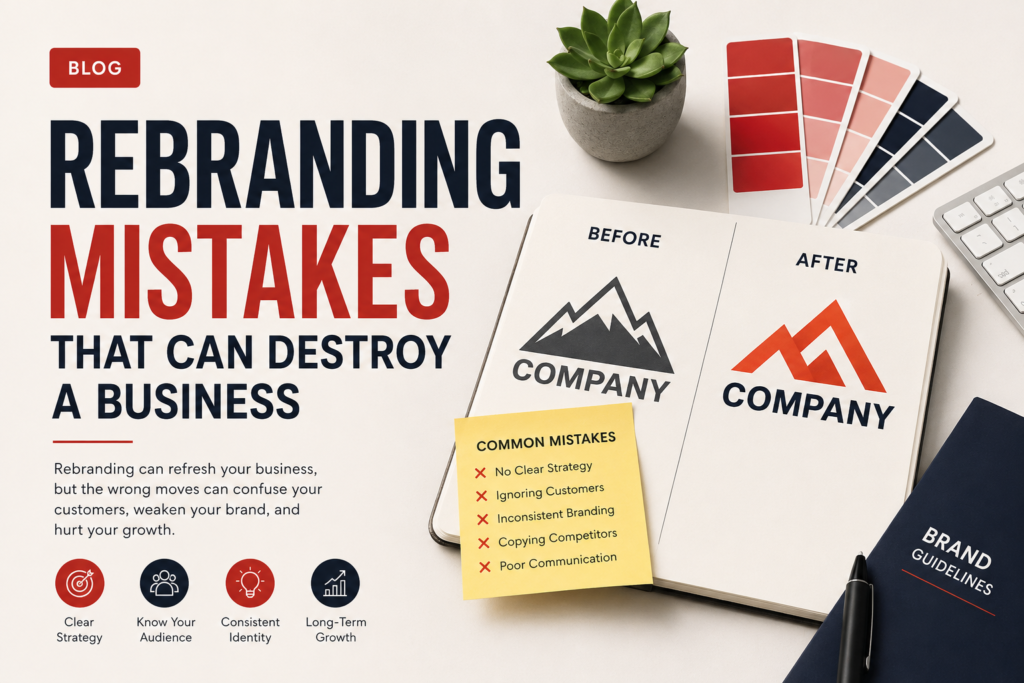
Rebranding Isn’t Just a New Logo—It’s a Business Decision
Many businesses believe that rebranding simply means changing a logo, updating colors, or creating a modern website. In reality, rebranding is much more than a visual makeover. It represents a shift in how a company communicates its identity, values, and promise to customers.
When done strategically, rebranding can revive a struggling business, attract new audiences, and increase customer loyalty. However, when handled poorly, it can confuse customers, damage trust, and even lead to significant revenue loss.
Some of the world’s biggest companies have experienced both successful and unsuccessful rebranding efforts. The difference isn’t creativity—it’s strategy.
In this article, we’ll explore the most common rebranding mistakes that can seriously harm a business and explain how to avoid them.
1. Rebranding Without a Clear Purpose
One of the biggest mistakes businesses make is rebranding simply because they’re bored with their current identity or want to follow the latest design trends.
A successful rebrand should always solve a business problem.
Ask yourself:
- Has your target audience changed?
- Are you entering a new market?
- Has your company outgrown its current identity?
- Is your brand perceived differently than intended?
If you cannot answer these questions, you’re probably not ready to rebrand.
What to Do Instead
Define measurable goals before changing anything.
Examples include:
- Reach a younger audience
- Improve premium positioning
- Expand internationally
- Increase brand recognition
- Modernize outdated branding
Every design decision should support these goals.
2. Ignoring Existing Brand Equity
Your logo, colors, typography, and messaging represent years of customer recognition.
Changing everything overnight can erase valuable trust you’ve already built.
Customers often develop emotional connections with familiar brands. Removing every recognizable element can make them feel disconnected.
Successful brands evolve rather than erase their identity.
What to Do Instead
Keep elements customers already recognize whenever possible.
Examples include:
- Maintaining signature colors
- Preserving recognizable typography
- Updating—not replacing—the logo
- Keeping consistent messaging
Evolution is usually more effective than revolution.
3. Following Design Trends Instead of Strategy
Minimalism.
Gradients.
3D effects.
Glassmorphism.
Neumorphism.
Every few years, new design trends emerge. Businesses often chase these trends without considering whether they align with their brand.
Design trends are temporary.
Brand identity should remain timeless.
What to Do Instead
Choose a visual identity based on:
- Brand personality
- Customer expectations
- Industry standards
- Long-term usability
A timeless identity often outperforms a trendy one.
4. Forgetting Your Target Audience
Many companies design a brand they personally like instead of one their customers connect with.
Your audience—not your team—determines whether a rebrand succeeds.
Before making major decisions, ask:
- Who is our ideal customer?
- What do they value?
- What emotions should our brand evoke?
- How do they currently perceive us?
Ignoring customer feedback is one of the fastest ways to fail.
What to Do Instead
Conduct:
- Customer interviews
- Surveys
- Market research
- Social media feedback
- Competitor analysis
Real insights lead to stronger branding decisions.
5. Changing Everything at Once
Some businesses replace:
- Logo
- Colors
- Website
- Packaging
- Messaging
- Tone of voice
- Product names
…all at the same time.
Customers struggle to recognize the brand.
Recognition drops.
Confusion rises.
Sales often suffer.
What to Do Instead
Introduce changes gradually whenever possible.
Communicate why the changes are happening and how they benefit customers.
People accept change more easily when they understand the reason behind it.
6. Poor Communication During the Rebrand
Customers hate surprises.
Imagine opening your favorite app one morning and finding a completely different logo, website, and messaging without explanation.
Many businesses forget to tell customers:
- Why the rebrand happened
- What’s changing
- What’s staying the same
- How it benefits them
This creates uncertainty.
What to Do Instead
Build excitement before launch.
Share:
- Behind-the-scenes content
- The story behind the redesign
- Customer benefits
- Team insights
- Launch countdowns
People appreciate transparency.
7. Inconsistent Branding Across Platforms
Many businesses update their logo but forget:
- Social media profiles
- Email signatures
- Business cards
- Packaging
- Advertising
- Website graphics
- Presentation templates
This creates a fragmented experience.
Customers wonder whether they’re interacting with the same company.
What to Do Instead
Prepare a comprehensive rollout plan.
Ensure every customer touchpoint reflects the updated identity on launch day.
Consistency builds trust.
8. Copying Competitors
Looking at competitors for inspiration is normal.
Copying them is dangerous.
If your branding looks like everyone else’s, customers have no reason to remember you.
Strong brands stand out.
Weak brands blend in.
What to Do Instead
Identify what makes your business unique.
Build branding around:
- Your story
- Your mission
- Your values
- Your expertise
- Your customer experience
Differentiation is a competitive advantage.
9. Ignoring Internal Branding
Employees are your first brand ambassadors.
If your own team doesn’t understand the new brand, customers won’t either.
Internal confusion quickly becomes external confusion.
What to Do Instead
Before launching publicly:
- Train employees
- Explain the new positioning
- Share updated messaging
- Provide brand guidelines
- Encourage team feedback
A successful rebrand starts from the inside.
10. Measuring Success Too Early
Many businesses expect immediate results after launching a new identity.
But branding is a long-term investment.
Building recognition takes time.
Judging success after only a few weeks can lead to unnecessary changes.
What to Do Instead
Track meaningful metrics over several months, such as:
- Website traffic
- Brand awareness
- Social media engagement
- Customer retention
- Lead generation
- Conversion rates
- Customer sentiment
Data should guide future decisions.
Signs Your Business May Need a Rebrand
You don’t always need a complete transformation.
Consider rebranding if:
- Your visual identity looks outdated.
- Your target audience has changed.
- Your business has expanded into new markets.
- Customers misunderstand what you offer.
- Your competitors look more modern.
- Your messaging no longer reflects your values.
- Your brand lacks consistency across platforms.
If these issues sound familiar, a strategic rebrand may help.
Best Practices for a Successful Rebrand
Before making any changes, follow this checklist:
- Define clear business objectives.
- Research your audience thoroughly.
- Audit your current brand assets.
- Preserve valuable brand recognition.
- Develop a comprehensive brand strategy.
- Create detailed brand guidelines.
- Communicate changes clearly.
- Update every customer touchpoint.
- Train your internal team.
- Measure performance over time.
Rebranding is a process—not a single design project.
Final Thoughts
A successful rebrand isn’t about creating the trendiest logo or the most eye-catching color palette. It’s about aligning your business identity with your long-term vision while preserving the trust you’ve already earned.
The strongest brands don’t change for the sake of change. They evolve with purpose, guided by strategy, customer insights, and consistency.
Before starting your next rebrand, ask one simple question:
“Will this change help our customers understand, trust, and remember our brand more effectively?”
If the answer is yes, you’re moving in the right direction.
Key Takeaways
- Rebrand with a clear business objective.
- Protect the brand equity you’ve already built.
- Prioritize customer insights over design trends.
- Communicate changes transparently.
- Maintain consistency across every touchpoint.
- Differentiate your brand instead of copying competitors.
- Train your team before launching.
- Measure results using long-term business metrics.
A thoughtful rebrand can strengthen your business for years to come. A rushed or poorly planned one can undermine customer trust overnight. Strategy—not aesthetics alone—is what makes the difference.