
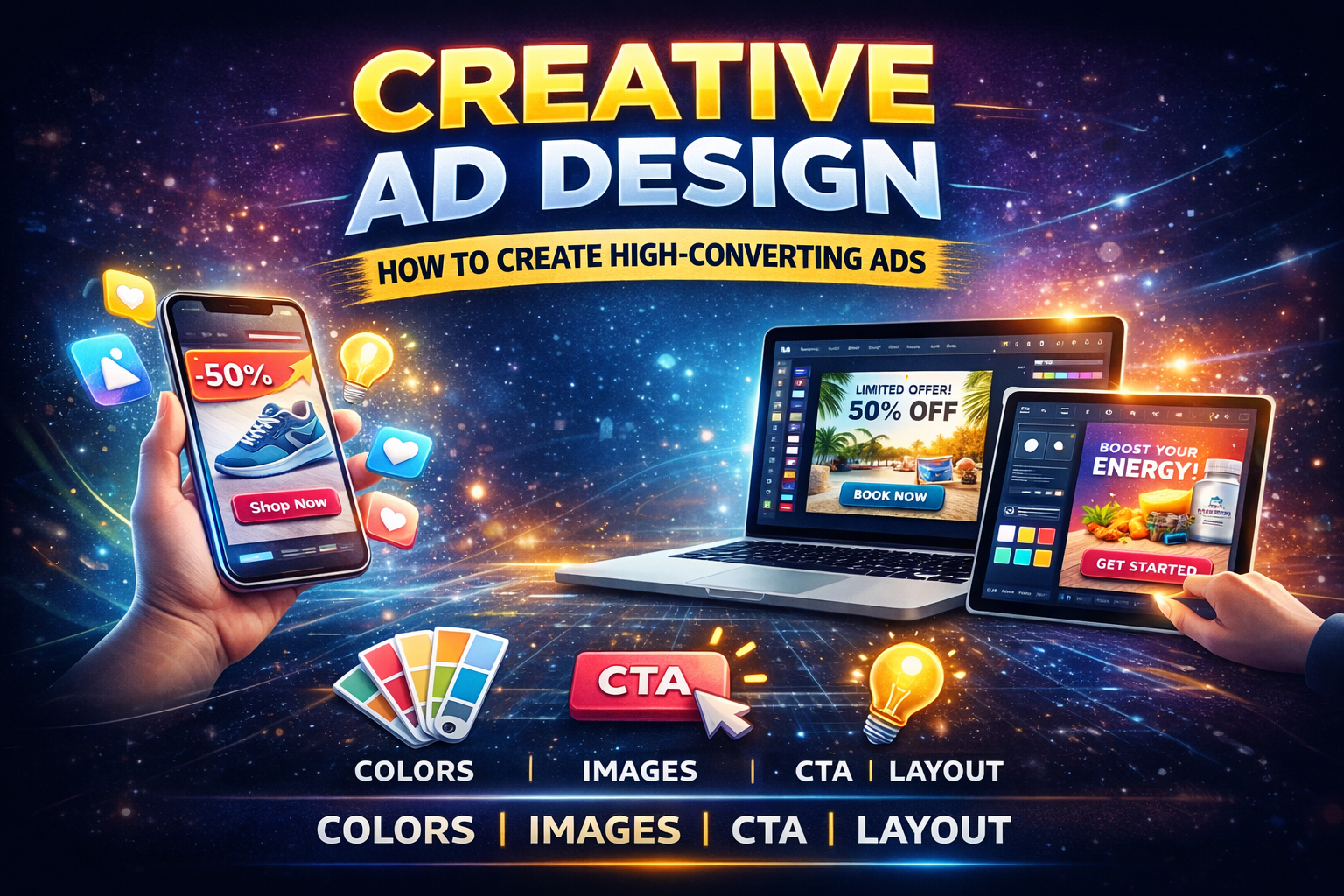
📌 Introduction
In today’s competitive digital world, attention is the most valuable currency. Every day, users are exposed to thousands of ads across social media, websites, and apps.
So how do you stand out?
The answer lies in creative ad design. A well-designed ad doesn’t just look attractive—it captures attention, communicates value, and drives action.
In this guide, you’ll learn everything you need to know about creating high-converting ad creatives that boost engagement and sales.
🎨 What Is Creative Ad Design?
Creative ad design is the strategic process of combining visual elements, messaging, and marketing psychology to create ads that influence user behavior.
It includes:
- Visual design (images, graphics, colors)
- Copywriting (headline, message, CTA)
- Layout and composition
- Branding consistency
👉 The goal is simple: Grab attention → Build interest → Drive action
🚀 Why Creative Ad Design Is Important
1. 👀 Captures Attention Instantly
Users scroll fast. Your ad has less than 3 seconds to make an impact.
2. 📈 Increases Conversion Rates
Well-designed ads improve click-through rates (CTR) and conversions.
3. 🧠 Builds Brand Recognition
Consistent design helps your audience remember your brand.
4. 📱 Improves Social Media Performance
Creative ads perform better on platforms like Instagram, Facebook, and YouTube.
🧠 Psychology Behind High-Converting Ads
Understanding human psychology can significantly improve your ad performance.
🔹 1. Color Psychology
- Red → Urgency, excitement
- Blue → Trust, professionalism
- Green → Growth, freshness
🔹 2. Emotional Appeal
Ads that trigger emotions (happiness, fear, curiosity) perform better.
🔹 3. Social Proof
Showing reviews, testimonials, or “10,000+ users” builds trust.
🔹 4. Scarcity & Urgency
“Limited Offer” or “Only Today” encourages quick action.
🧩 Key Elements of High-Converting Ad Design
🔹 1. Strong Headline
Your headline should be:
- Clear
- Bold
- Benefit-driven
👉 Example: “Boost Your Sales in 7 Days”
🔹 2. Eye-Catching Visuals
Use:
- High-quality images
- Clean graphics
- Product-focused visuals
🔹 3. Visual Hierarchy
Guide the viewer’s attention:
Headline → Image → CTA
🔹 4. Clear Call-to-Action (CTA)
Tell users what to do next:
- Shop Now
- Learn More
- Get Started
🔹 5. Minimal Design
Avoid clutter. Focus on one message per ad.
🔹 6. Mobile Optimization
Most users are on mobile—design accordingly.
🛠️ Best Tools for Creative Ad Design
- Canva (Beginner-friendly)
- Adobe Photoshop (Advanced editing)
- Adobe Illustrator (Vector design)
- Figma (UI/UX and layout design)
- CapCut (Video ad creation)
💡 Advanced Tips for Better Ad Creatives
- Use contrast to highlight key elements
- Add motion (GIFs or short videos)
- Focus on benefits, not features
- Use real-life visuals for authenticity
- A/B test multiple creatives
⚠️ Common Mistakes to Avoid
- ❌ Too much text in ads
- ❌ Weak or missing CTA
- ❌ Poor color combinations
- ❌ Low-quality visuals
- ❌ Ignoring brand consistency
🔮 Future Trends in Creative Ad Design (2026)
- 🤖 AI-generated ad creatives
- 🎥 Short-form video dominance
- 🧍 Personalized ad visuals
- 🕶️ AR/VR advertising experiences
- ⚡ Interactive and dynamic ads
💡 Real-Life Example
Imagine you’re promoting a skincare product:
❌ Bad Ad:
- Too much text
- No clear message
- Low-quality image
✅ Good Ad:
- Clean layout
- High-quality product image
- Bold headline: “Glowing Skin in 7 Days”
- CTA: “Shop Now”
👉 Result: Higher engagement and more sales.
🏁 Conclusion
Creative ad design is not just about aesthetics—it’s about strategy, psychology, and performance.
A powerful ad combines the right visuals, message, and structure to guide users toward action.
If you want better results from your ads, focus on creativity, clarity, and continuous testing.
👉 Remember: The best ads don’t just look good—they sell.