
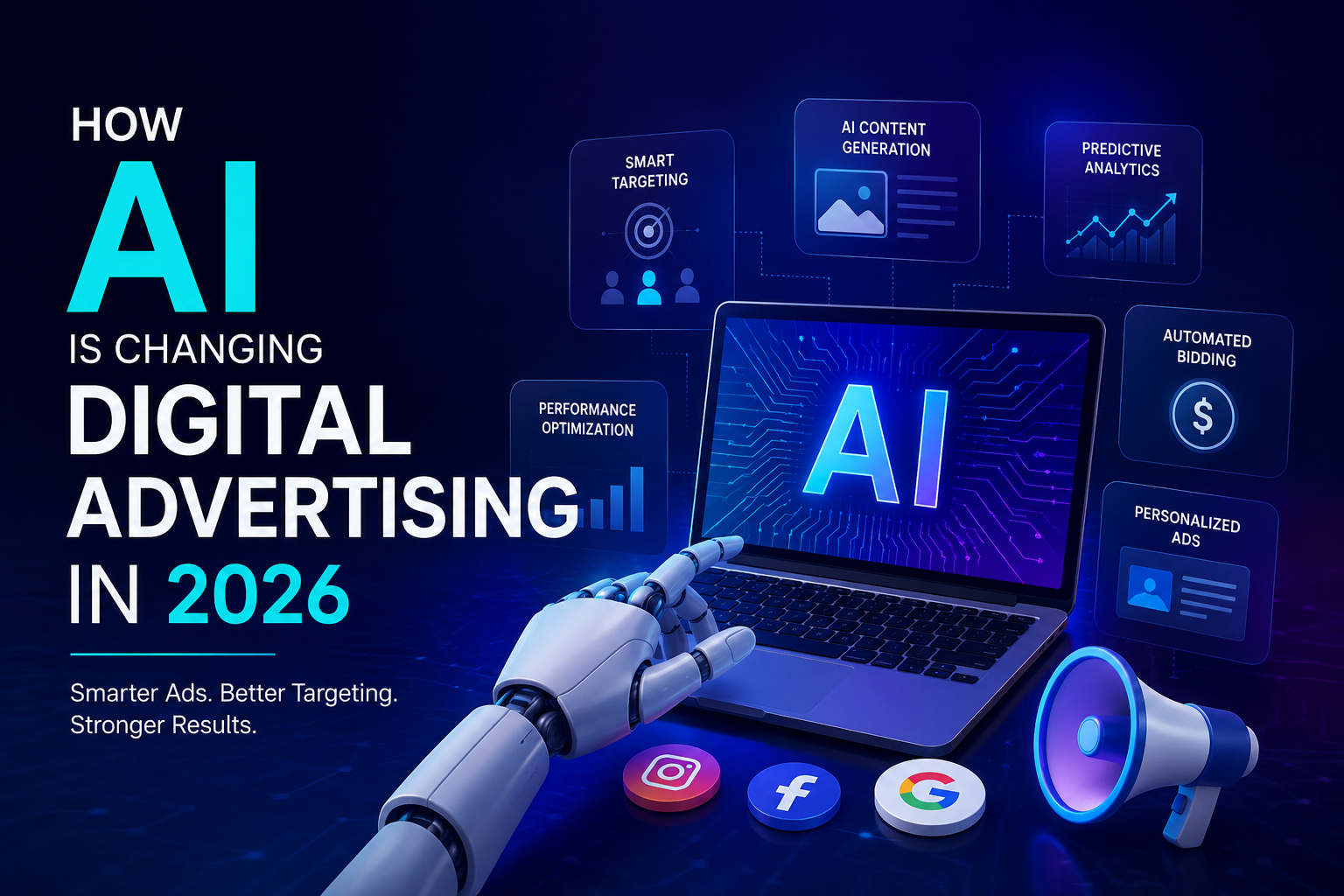
Digital advertising has entered a completely new era in 2026. Artificial Intelligence (AI) is no longer just a futuristic technology used by large corporations — it has become the foundation of modern marketing. From automated ad creation to hyper-personalized customer targeting, AI is transforming the way brands connect with audiences online.
Businesses today use AI to create better campaigns, reduce advertising costs, improve customer engagement, and increase sales faster than ever before. Whether it’s social media ads, search engine marketing, email campaigns, or product photography, AI is changing every aspect of digital advertising.
In this blog, we’ll explore how AI is reshaping digital advertising in 2026, the biggest trends, benefits, challenges, and what the future looks like for marketers.
The Rise of AI in Advertising
Over the last few years, AI technology has evolved rapidly. In 2026, AI tools can now:
- Generate ad copy automatically
- Create realistic product images
- Analyze customer behavior
- Predict buying decisions
- Optimize ad performance in real time
- Produce video advertisements using prompts
- Personalize marketing content for each user
This means businesses can launch professional advertising campaigns in minutes instead of weeks.
Companies like Google, Meta, and OpenAI are continuously integrating AI into their advertising ecosystems, making marketing smarter and more efficient.
1. AI-Powered Personalized Advertising
One of the biggest changes in 2026 is hyper-personalization.
Traditional advertising showed the same ad to thousands of people. AI advertising shows different versions of ads to different users based on:
- Search history
- Shopping behavior
- Interests
- Age and demographics
- Online activity
- Location
- Device usage
For example, an online fashion store can now automatically show:
- Sportswear ads to fitness lovers
- Luxury fashion ads to premium buyers
- Budget deals to price-sensitive customers
AI analyzes huge amounts of customer data instantly and delivers ads that feel more relevant and personal.
This increases:
- Click-through rates
- Customer engagement
- Conversion rates
- Return on ad spend (ROAS)
2. AI Generates Ad Creatives Automatically
In 2026, marketers no longer need large design teams for every campaign.
AI tools can now generate:
- Product photos
- Advertising posters
- Social media graphics
- Video ads
- Backgrounds
- Brand mockups
- Motion graphics
Businesses simply upload a product image and enter a text prompt like:
“Create a premium skincare advertisement with soft lighting and luxury background.”
Within seconds, AI creates studio-quality visuals.
This technology is especially useful for:
- E-commerce brands
- Small businesses
- Freelancers
- Social media marketers
- Product advertisers
AI-generated creatives reduce production costs while increasing content speed.
3. AI Video Advertising Is Exploding
Short-form video platforms have become the center of digital advertising.
Apps like:
- TikTok
- YouTube
are heavily driven by AI recommendation systems.
In 2026, AI video generators can:
- Create commercials from text prompts
- Convert blogs into videos
- Translate videos into multiple languages
- Generate AI voiceovers
- Synchronize lip movement automatically
- Create realistic avatars for ads
Brands can now produce multiple ad variations quickly and test which performs best.
This makes video marketing faster, cheaper, and highly scalable.
4. Smarter Audience Targeting
AI has dramatically improved audience targeting.
Instead of manually selecting interests and demographics, AI now predicts:
- Which users are likely to buy
- When customers are ready to purchase
- Which products they may prefer
- Which ad format will perform best
Advertising platforms automatically optimize campaigns using machine learning.
For example:
- AI pauses low-performing ads
- Increases budget on winning campaigns
- Changes targeting automatically
- Tests multiple headlines in real time
This helps advertisers spend money more efficiently.
5. AI Chatbots Improve Customer Engagement
AI chatbots have become smarter and more human-like in 2026.
Businesses use AI chatbots on:
- Websites
- Facebook Messenger
- E-commerce stores
- Customer support systems
These bots can:
- Answer customer questions instantly
- Recommend products
- Help users place orders
- Collect customer data
- Upsell related products
This creates a faster and smoother customer experience while reducing support costs.
6. Voice Search and AI Assistants Are Influencing Advertising
Voice assistants like:
- Google Assistant
- Siri
- Alexa
are changing how users search online.
People now use conversational searches such as:
- “Best budget smartphone near me”
- “Top baby diaper brands in India”
- “Affordable skincare products online”
As a result, marketers are optimizing ads for voice-based searches and conversational keywords.
AI helps brands understand natural language better than traditional search systems.
7. Predictive Analytics Is Improving Marketing Decisions
AI can now predict future customer behavior using historical data.
This is called predictive analytics.
AI systems analyze:
- Past purchases
- Website visits
- Customer engagement
- Ad performance
- Seasonal trends
Then they forecast:
- Future sales
- Trending products
- Best advertising times
- Customer lifetime value
This helps brands make smarter marketing decisions and reduce wasted ad spending.
8. AI Reduces Advertising Costs
One major advantage of AI advertising is cost reduction.
AI automates:
- Design work
- Copywriting
- Editing
- Campaign optimization
- Analytics
- Customer support
Small businesses that previously needed large marketing teams can now create professional campaigns with minimal budgets.
This makes digital advertising more accessible for startups and creators.
9. Ethical Concerns and Challenges
Even though AI offers many benefits, it also creates challenges.
Some concerns include:
- Data privacy issues
- Fake AI-generated content
- Deepfake advertisements
- Loss of creative originality
- Overdependence on automation
Consumers are becoming more aware of AI-generated media, so brands must maintain transparency and authenticity.
Human creativity still plays an important role in building emotional connections with audiences.
10. The Future of AI Advertising
The future of advertising will likely combine:
- Human creativity
- AI automation
- Real-time personalization
- Immersive experiences
In the coming years, we may see:
- Fully AI-generated ad campaigns
- Virtual AI influencers
- Interactive shopping ads
- AI-generated movies for brands
- Personalized advertisements for every individual
Businesses that adopt AI early will have a major competitive advantage.
Final Thoughts
AI is transforming digital advertising faster than ever before. In 2026, advertising is no longer just about creativity — it’s about smart automation, personalization, and data-driven decision-making.
From AI-generated visuals to predictive customer targeting, businesses can now create highly effective marketing campaigns with greater speed and lower costs.
However, successful advertising still requires human emotion, storytelling, and brand authenticity. The best results come when human creativity and AI technology work together.
As AI continues to evolve, marketers who adapt to these changes will lead the future of digital advertising.