
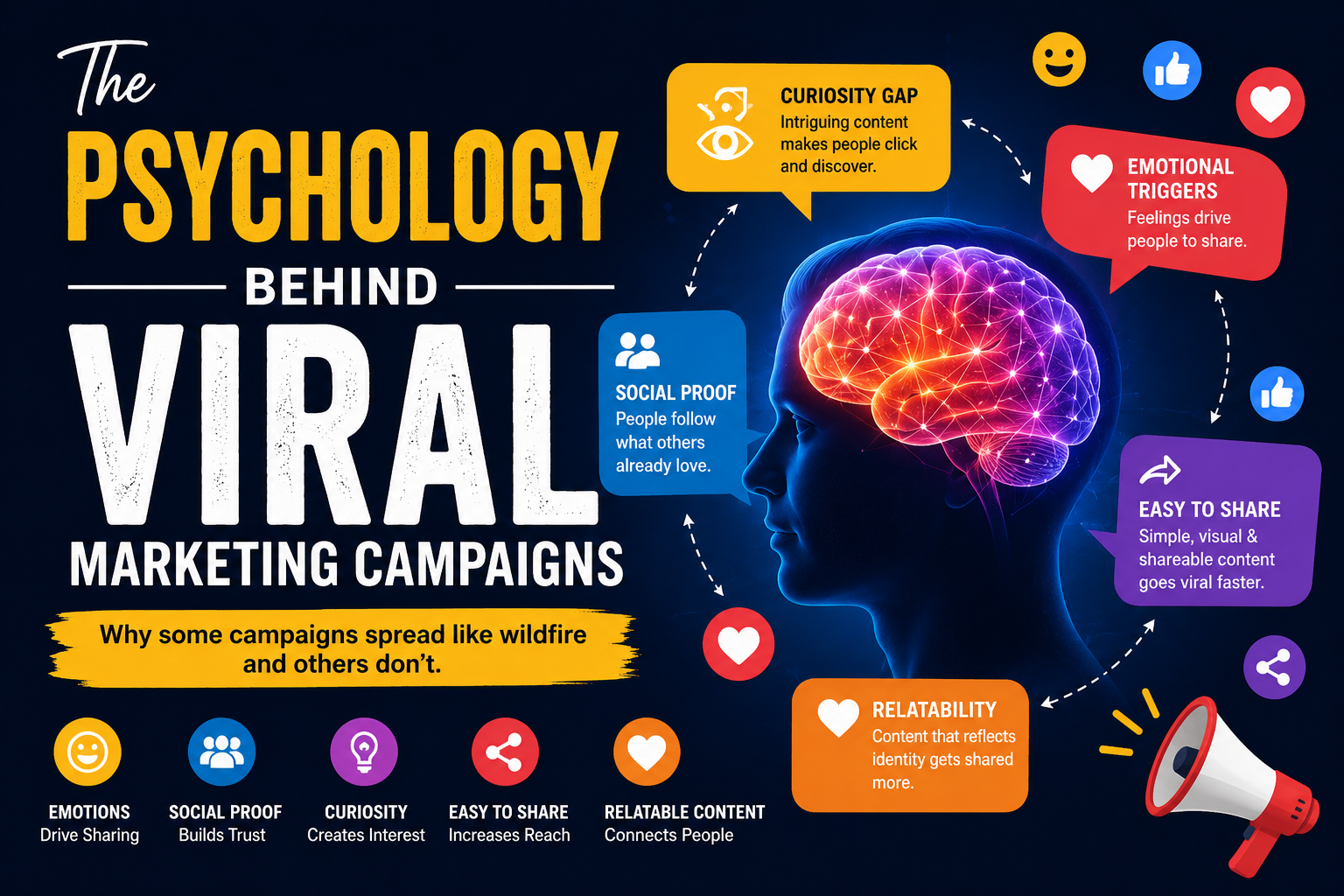
In today’s digital world, some marketing campaigns explode overnight while others disappear without attention. A funny meme, emotional video, or creative advertisement can suddenly dominate social media feeds, gain millions of views, and turn ordinary brands into global conversations.
But what makes content go viral?
The answer lies in human psychology. Viral marketing is not just luck — it is deeply connected to emotions, social behavior, curiosity, and the way people interact online.
This article explores the psychology behind viral marketing campaigns and why certain content spreads faster than others.
What Is Viral Marketing?
Viral marketing is a strategy where people rapidly share content through social media, messaging apps, websites, and online communities. The goal is to create content so engaging that users voluntarily promote it themselves.
Unlike traditional advertising, viral marketing relies heavily on:
- Emotional connection
- Social sharing
- Entertainment
- Relatability
- Audience participation
When a campaign resonates emotionally, people naturally want to share it with others.
Why Do People Share Content Online?
People do not share content randomly. Psychology research shows that sharing online is connected to identity, emotions, and social interaction.
Here are the biggest psychological triggers behind viral campaigns:
1. Emotional Reactions Drive Sharing
Strong emotions are one of the biggest reasons content becomes viral.
People are more likely to share content that makes them feel:
- Happy
- Inspired
- Surprised
- Excited
- Angry
- Emotional
High-emotion content creates a stronger psychological response, which increases engagement and sharing behavior.
Example:
Heartwarming advertisements about family, friendship, or social causes often spread quickly because they create emotional attachment.
2. People Share Content That Reflects Their Identity
Social media acts like a digital personality showcase. Users share content that represents:
- Their beliefs
- Sense of humor
- Lifestyle
- Intelligence
- Values
When people share a post, they are indirectly telling others:
“This represents who I am.”
This is why relatable memes, motivational posts, and socially aware campaigns perform extremely well.
3. Curiosity Makes People Click
Humans naturally seek answers and closure. Viral campaigns often use curiosity to attract attention.
Examples include:
- “You Won’t Believe What Happened Next”
- “The Secret Most Brands Ignore”
- “One Simple Trick That Changed Everything”
Curiosity creates a psychological gap between what people know and what they want to know. This encourages clicks, views, and shares.
However, successful campaigns balance curiosity with genuine value. Misleading clickbait may generate clicks temporarily but damages trust long-term.
4. Social Proof Influences Behavior
People trust content that others already approve of.
When users see:
- Millions of views
- Thousands of likes
- Positive comments
- Influencer endorsements
they automatically assume the content is valuable.
This psychological principle is called social proof.
The more engagement a campaign receives, the more likely new users are to interact with it.
5. Humor Increases Shareability
Funny content spreads rapidly because laughter creates positive emotions and social connection.
Humor:
- Reduces stress
- Builds relatability
- Makes brands feel human
- Encourages tagging friends
This is why meme marketing and short-form comedy videos dominate platforms like Instagram, TikTok, and YouTube Shorts.
Brands that successfully use humor often appear more approachable and memorable.
6. Fear of Missing Out (FOMO)
FOMO is one of the most powerful psychological marketing triggers.
People dislike feeling excluded from trends, conversations, or opportunities.
Viral campaigns often use:
- Limited-time offers
- Trending challenges
- Exclusive access
- Countdown timers
- Community participation
When users believe “everyone is talking about this,” they feel pressure to engage quickly.
7. Simplicity Helps Content Spread Faster
The human brain processes simple information more easily than complex information.
Successful viral campaigns are usually:
- Easy to understand
- Visually clean
- Emotionally direct
- Quickly consumable
Short videos, simple slogans, and minimal design perform well because users can instantly understand the message.
Examples:
- “Just Do It”
- “Think Different”
- “Share a Coke”
Simple ideas are easier to remember and share.
8. Storytelling Creates Emotional Connection
Humans naturally connect with stories more than facts.
A strong story:
- Captures attention
- Creates emotional investment
- Makes brands memorable
- Encourages audience empathy
Many successful viral campaigns focus less on products and more on human experiences.
Instead of selling directly, they create narratives that audiences emotionally connect with.
9. Visual Content Gets More Attention
The brain processes visuals faster than text.
This is why viral campaigns heavily use:
- Bold visuals
- Bright colors
- Short videos
- Motion graphics
- Emotional imagery
Platforms like Instagram and TikTok reward visually engaging content because users consume information quickly.
Strong visual design increases retention and shareability.
10. Participation Makes Campaigns Stronger
People enjoy being part of trends.
Viral campaigns often encourage users to:
- Create their own videos
- Join challenges
- Use hashtags
- Share opinions
- Remix content
User participation creates a feeling of community and ownership.
This transforms audiences from passive viewers into active promoters.
Real Examples of Viral Marketing Psychology
Ice Bucket Challenge
The campaign became viral because it combined:
- Social pressure
- Public participation
- Entertainment
- Charity support
People nominated friends, creating endless sharing loops.
Coca-Cola’s “Share a Coke”
The campaign succeeded because it personalized products using names.
It triggered:
- Emotional connection
- Identity sharing
- Social media posting
Consumers became part of the marketing itself.
TikTok Trends
TikTok trends spread rapidly because they combine:
- Music
- Short-form entertainment
- Community participation
- Algorithm-driven visibility
Users join trends to feel socially connected and relevant.
The Role of AI in Viral Marketing
Artificial intelligence is now transforming how brands create viral campaigns.
AI helps marketers:
- Analyze consumer behavior
- Predict trends
- Generate creative ideas
- Personalize advertisements
- Optimize social media targeting
Modern brands use AI to understand emotional engagement patterns and improve content performance.
Common Mistakes in Viral Marketing
Many brands fail because they:
- Copy trends without originality
- Focus only on views instead of value
- Ignore emotional connection
- Use misleading clickbait
- Overcomplicate messaging
True viral marketing is not just about attention — it is about meaningful audience engagement.
Final Thoughts
Viral marketing is deeply connected to human psychology. People share content that makes them feel something, reflects their identity, or helps them connect socially.
The most successful campaigns combine:
- Emotion
- Simplicity
- Storytelling
- Humor
- Social proof
- Participation
As digital platforms continue evolving, understanding audience psychology will become even more important for brands that want to stand out online.
In the end, viral marketing is not simply about selling products — it is about creating experiences people genuinely want to share.