
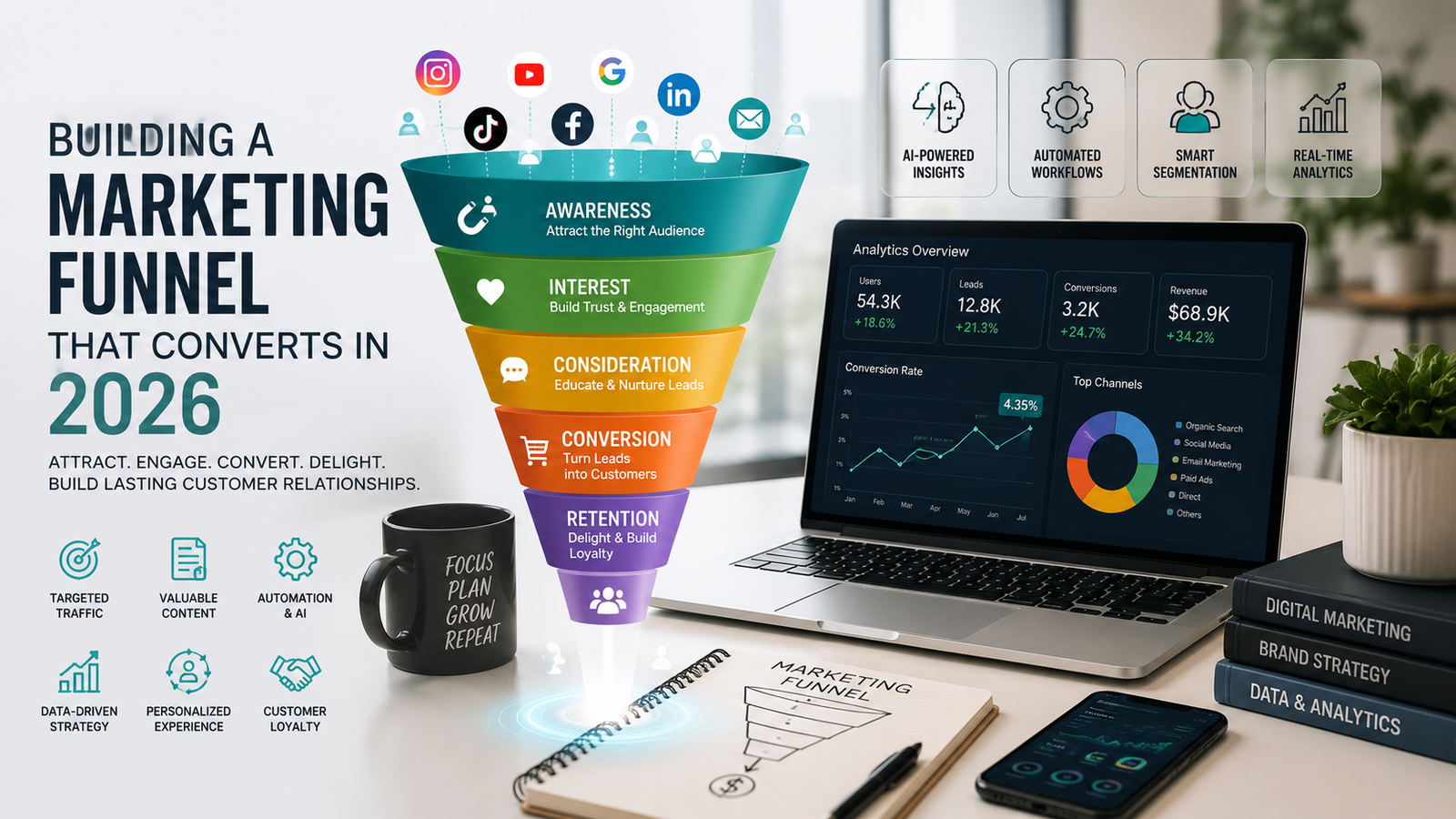
A high-converting marketing funnel in 2026 is no longer just about pushing customers from awareness to purchase. Today’s consumers expect personalized experiences, authentic communication, valuable content, and seamless interactions across multiple platforms. Brands that understand this shift can turn casual visitors into loyal customers and long-term advocates.
1. Attract the Right Audience
The first stage of a successful marketing funnel is awareness. Instead of trying to reach everyone, brands should focus on attracting people who genuinely need their products or services.
Use short-form videos, educational blog content, social media posts, SEO, influencer collaborations, and targeted advertising to capture attention. The goal is not simply to generate more traffic but to bring qualified potential customers into your funnel.
2. Create Content That Builds Trust
Consumers in 2026 research extensively before making purchasing decisions. Valuable content helps establish credibility and positions your brand as a trusted solution.
Create helpful guides, case studies, product demonstrations, customer testimonials, FAQs, and behind-the-scenes content. Rather than constantly promoting your products, focus on answering real customer questions and solving genuine problems.
3. Personalize the Customer Journey
Generic marketing messages are becoming less effective. Modern consumers expect content and offers that match their interests, behaviors, and needs.
AI-powered tools can help brands personalize emails, website recommendations, advertising campaigns, and product suggestions. Effective personalization makes customers feel understood while helping brands deliver more relevant experiences.
4. Capture Leads with Real Value
Getting someone’s email address or contact information requires offering something genuinely useful in return. Lead magnets should solve a specific problem or provide immediate value.
Examples include free guides, templates, checklists, webinars, free trials, consultations, discount codes, and interactive tools. Keep sign-up forms simple and clearly explain what users will receive.
5. Nurture Leads Across Multiple Channels
Not every potential customer is ready to buy immediately. Lead nurturing keeps your brand relevant while gradually building confidence.
Use email marketing, retargeting ads, social media content, WhatsApp updates, and personalized recommendations to maintain communication. The key is to provide useful information without overwhelming your audience with constant sales messages.
6. Remove Friction from the Conversion Process
Even strong marketing can fail if purchasing is complicated. Customers expect fast websites, simple navigation, transparent pricing, clear calls to action, and easy checkout experiences.
Review every step of your conversion process and eliminate unnecessary forms, confusing pages, hidden costs, or excessive clicks. The easier it is to take action, the higher your conversion potential.
7. Use Social Proof to Reduce Doubt
Trust remains one of the biggest factors influencing purchasing decisions. Reviews, testimonials, user-generated content, case studies, certifications, and real customer results can reduce hesitation.
Place social proof strategically throughout your funnel, especially on landing pages, product pages, pricing sections, and checkout screens.
8. Optimize with Data and AI
A successful funnel is never truly finished. Brands should continuously analyze performance and identify where potential customers drop off.
Track metrics such as traffic sources, click-through rates, lead conversion rates, customer acquisition costs, checkout abandonment, and customer lifetime value. AI-powered analytics can help identify patterns and opportunities faster, but human strategy remains essential for making meaningful decisions.
Conclusion
Building a marketing funnel that converts in 2026 requires more than attracting traffic and pushing for sales. Successful brands create connected experiences that combine valuable content, personalization, trust, social proof, and frictionless customer journeys.
The strongest funnels focus on helping customers make confident decisions at every stage—from discovering the brand to becoming loyal advocates. By continuously testing, analyzing, and improving each touchpoint, businesses can create marketing funnels that drive sustainable growth and stronger customer relationships.