
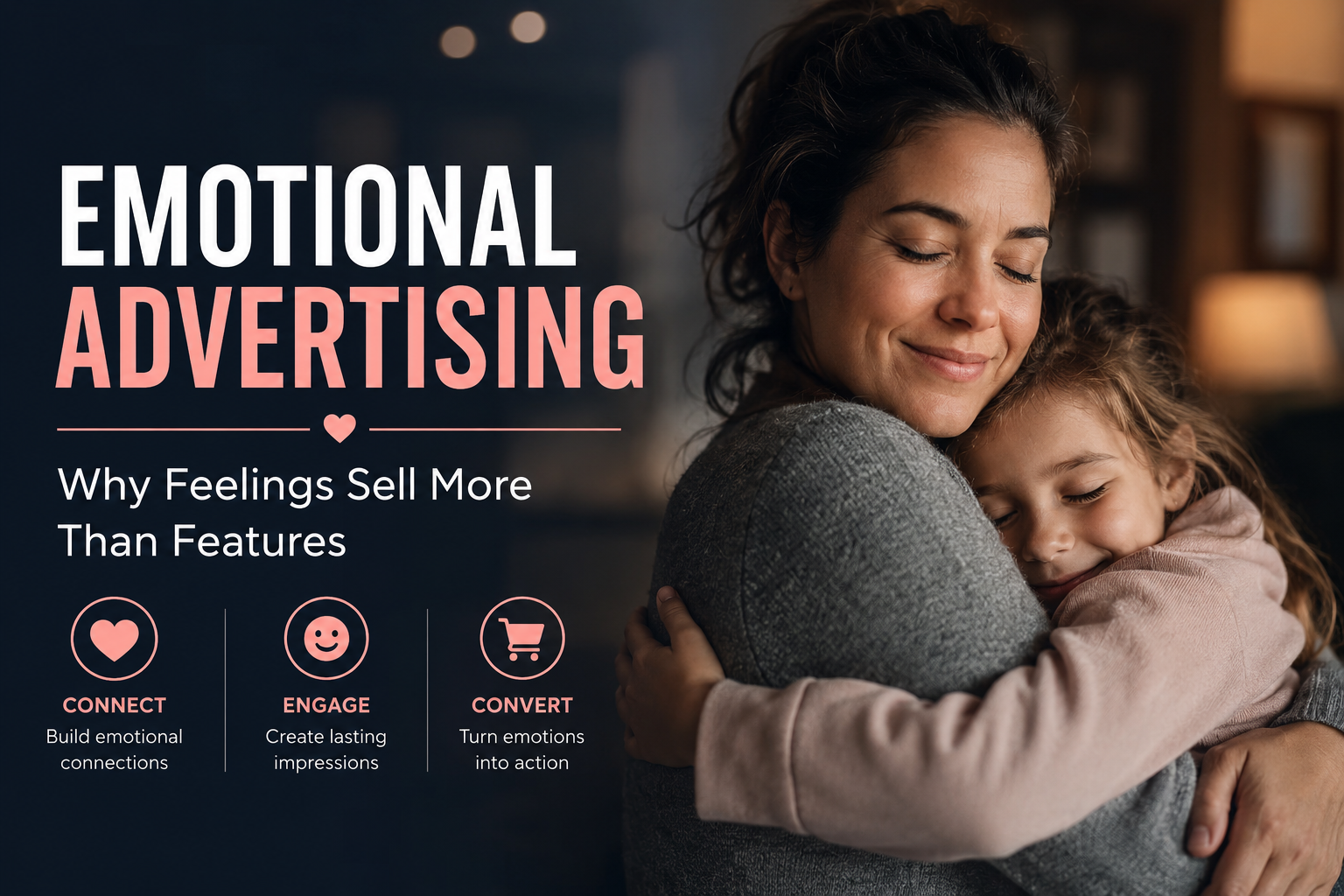
In today’s competitive market, customers are exposed to thousands of advertisements every single day. Most brands talk about product quality, price, specifications, and features — yet only a few advertisements truly stay in people’s minds. The reason is simple: people may forget information, but they remember emotions.
Emotional advertising has become one of the most powerful marketing strategies because human buying decisions are often driven by feelings rather than logic. Whether it is happiness, nostalgia, trust, excitement, or inspiration, emotions create deeper connections between brands and consumers.
What Is Emotional Advertising?
Emotional advertising is a marketing technique that focuses on creating emotional responses instead of only promoting product features. The goal is to make consumers feel something meaningful that connects them to the brand.
Instead of saying:
“Our skincare cream contains Vitamin C.”
An emotional advertisement says:
“Feel confident in your natural beauty every day.”
The product remains the same, but the emotional connection changes how people perceive it.
Why Emotions Influence Buying Decisions
Studies in consumer psychology show that emotions strongly affect purchasing behavior. People often buy products because of how those products make them feel.
Customers may purchase:
- Luxury products to feel successful
- Beauty products to feel confident
- Fitness products to feel motivated
- Eco-friendly products to feel responsible
- Technology products to feel modern and smart
Even when customers compare features, emotions usually guide the final decision.
The Science Behind Emotional Marketing
Human brains process emotions faster than logical information. Emotional experiences are also easier to remember. This is why emotionally powerful advertisements often become viral and memorable.
Advertisements that create emotional impact can:
- Increase brand recall
- Build customer loyalty
- Improve engagement
- Increase conversions and sales
- Create stronger brand identity
Brands that emotionally connect with audiences are more likely to gain long-term customers rather than one-time buyers.
Types of Emotions Used in Advertising
1. Happiness
Brands use positive emotions to associate their products with joy and satisfaction.
Example:
Food and beverage advertisements often show families smiling together during celebrations.
2. Nostalgia
Nostalgic marketing reminds people of happy memories from the past.
Example:
Brands use childhood memories, retro music, or old-style visuals to create emotional comfort.
3. Fear or Urgency
Some advertisements create urgency or fear to encourage immediate action.
Example:
Health campaigns or limited-time offers often use this strategy carefully.
4. Inspiration
Motivational storytelling encourages audiences to dream bigger and take action.
Example:
Fitness and sports brands frequently use inspirational advertising.
5. Trust and Security
Financial, healthcare, and skincare brands focus on safety and reliability to build confidence.
Emotional Storytelling in Modern Advertising
Storytelling is one of the strongest emotional marketing tools. Instead of directly selling products, brands create stories that audiences emotionally relate to.
A good emotional advertisement usually includes:
- A relatable character
- A real-life challenge
- Emotional transformation
- A satisfying ending
- The product naturally integrated into the story
This approach feels more authentic than aggressive selling.
Social Media and Emotional Content
Platforms like Instagram, TikTok, and YouTube have made emotional marketing even more powerful. Short-form videos that create emotional reactions often receive:
- More shares
- More comments
- Higher engagement
- Better conversion rates
Content that makes people laugh, cry, feel inspired, or feel understood spreads faster online.
Why Features Alone Are Not Enough
Features explain what a product does, but emotions explain why it matters.
For example:
A phone brand can advertise:
- Camera quality
- Battery life
- Performance
But emotional marketing shows:
- Capturing family memories
- Staying connected with loved ones
- Expressing creativity
People buy experiences and feelings, not just specifications.
How Brands Can Use Emotional Advertising Effectively
Understand Your Audience
Know your customers’ desires, struggles, dreams, and emotions.
Focus on Human Stories
Real stories feel more authentic than sales-focused messaging.
Use Visual Emotion
Colors, music, lighting, and facial expressions strongly influence emotional reactions.
Keep the Message Simple
The most emotional advertisements are often simple and relatable.
Be Authentic
Modern consumers quickly recognize fake emotions. Authenticity builds trust.
The Future of Emotional Advertising
As AI and technology continue to evolve, emotional advertising is becoming more personalized. Brands can now create targeted campaigns based on consumer behavior, interests, and emotions.
However, the core principle remains unchanged:
People connect with brands that make them feel understood.
In the future, successful advertising will not only sell products — it will create emotional experiences that customers remember.
Conclusion
Emotional advertising works because humans are emotional decision-makers. While features and specifications are important, emotions create deeper connections that influence trust, loyalty, and purchasing behavior.
Brands that understand human emotions can create advertisements that are not only seen but also remembered. In a world full of endless content, feelings are what truly make a brand stand out.