
By Jay Vaghasiya | Marketing & Advertising Blog
Introduction
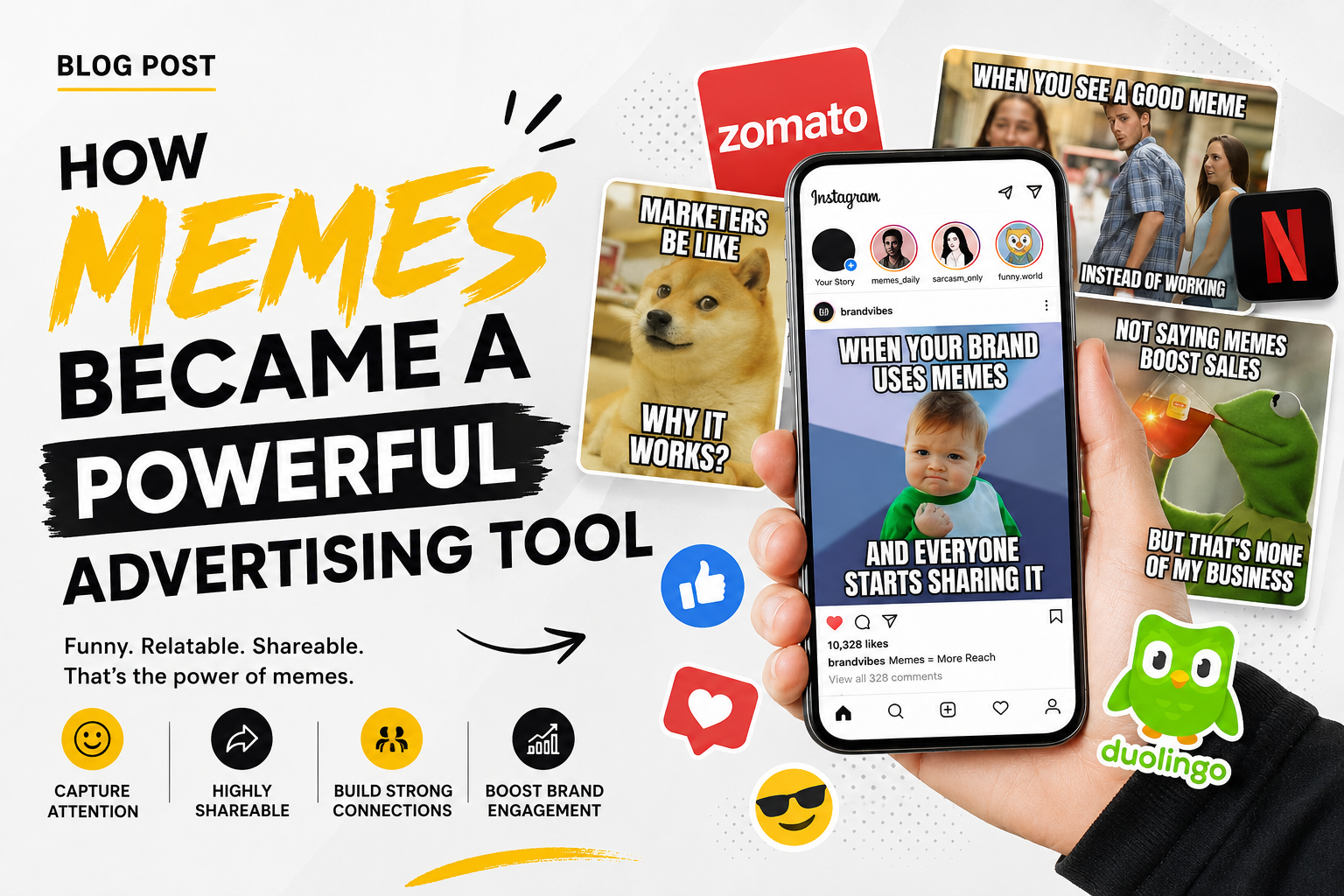
A few years ago, memes were simply internet jokes shared among friends. Today, they have evolved into one of the most powerful tools in digital marketing and advertising. From global brands to local startups, companies are using memes to connect with audiences, increase engagement, and create viral campaigns without spending millions on traditional advertisements.
In an age where consumers scroll through hundreds of posts every day, memes offer something rare: instant attention and authentic entertainment. But how did memes become such an influential marketing asset, and why are brands investing in meme culture?
Let’s explore.
What Exactly Is a Meme?
A meme is a piece of content—typically an image, video, GIF, or text—that spreads rapidly across the internet through sharing and adaptation.
Memes usually:
- Reflect current trends and pop culture
- Use humor and relatability
- Encourage user participation
- Spread organically through social media
Unlike traditional advertisements, memes feel natural within users’ feeds, making them less intrusive and more engaging.
The Shift From Traditional Ads to Meme Marketing
Traditional advertising focuses on selling products directly:
“Buy now. Limited offer. Best price.”
Meme marketing takes a different approach:
Entertain first, sell later.
Modern consumers, especially Gen Z and Millennials, prefer brands that communicate like real people rather than corporations. Memes help brands achieve exactly that.
Instead of pushing products aggressively, brands use humor to create emotional connections with their audience.
Why Memes Work So Well in Advertising
1. They Capture Attention Instantly
Social media users spend only a few seconds deciding whether to engage with content.
Memes are:
- Easy to understand
- Visually appealing
- Quick to consume
- Emotionally engaging
This makes them perfect for today’s fast-paced digital environment.
2. They Feel Authentic
People often ignore traditional advertisements because they recognize promotional intent immediately.
Memes, however, blend naturally into social feeds.
When brands use memes correctly, consumers perceive them as entertaining content rather than advertisements.
That authenticity builds trust and improves brand perception.
3. Memes Are Highly Shareable
The internet thrives on sharing.
People share content that:
- Makes them laugh
- Reflects their personality
- Relates to their experiences
- Connects them with their communities
A successful meme campaign can generate millions of impressions organically, reducing advertising costs significantly.
4. They Help Brands Connect With Younger Audiences
Gen Z and Millennials communicate through internet culture.
Memes have become a language of their own.
Brands that understand meme culture can:
- Build stronger communities
- Increase engagement rates
- Improve brand loyalty
- Stay culturally relevant
However, authenticity is crucial. Forced or outdated memes often produce the opposite effect.
Famous Brands Winning With Meme Marketing
Netflix
Netflix regularly uses memes based on its original shows and trending internet formats.
Instead of traditional promotions, the company creates relatable content that encourages users to share and discuss new releases.
Their social media presence feels more like a friend than a corporation.
Zomato
Zomato has mastered meme marketing in India.
Their strategy includes:
- Real-time trending content
- Relatable humor
- Regional references
- Minimal promotional language
This approach has helped the brand maintain massive engagement across platforms.
Duolingo
Duolingo transformed its mascot into an internet personality.
Through memes, short videos, and humorous content, the brand gained millions of followers and significantly increased its online visibility.
The lesson?
People connect with personalities more than advertisements.
The Psychology Behind Meme Marketing
Memes succeed because they trigger emotional responses.
Human brains naturally remember content associated with:
- Humor
- Surprise
- Relatability
- Social belonging
When consumers laugh at a brand’s meme, they develop positive emotional associations with that company.
This psychological connection influences future purchasing decisions more effectively than many traditional advertisements.
The Benefits of Meme Advertising
Low Production Costs
Traditional commercials require:
- Production teams
- Expensive equipment
- Actors
- Large budgets
Memes can often be created in minutes using simple graphic design tools.
Higher Engagement Rates
Memes typically receive:
- More shares
- More comments
- Better reach
- Increased organic visibility
Social media algorithms favor content that generates interactions, making memes particularly powerful.
Stronger Brand Personality
Modern consumers want brands with personalities.
Memes allow companies to appear:
- Fun
- Human
- Creative
- Culturally aware
This helps businesses stand out in crowded markets.
The Risks of Meme Marketing
Despite their advantages, memes can also backfire.
Using Outdated Trends
Internet culture moves incredibly fast.
Using old memes can make brands appear disconnected from their audience.
Forcing Humor
Not every business should adopt an overly comedic voice.
Authenticity matters more than following trends.
Brands should maintain consistency with their identity and values.
Ignoring Cultural Context
Some memes involve sensitive topics or cultural references.
Without proper understanding, brands risk controversy or negative publicity.
Research is essential before participating in internet trends.
Best Practices for Brands Using Memes
Stay Current
Follow:
- Trending topics
- Popular creators
- Social media conversations
- Internet culture
Timing often determines a meme’s success.
Know Your Audience
A meme that resonates with teenagers may fail with older consumers.
Understanding audience preferences is crucial.
Prioritize Entertainment
The primary goal should be making people laugh or relate.
Sales messages should remain secondary.
People share entertainment—not advertisements.
Be Authentic
Brands should adopt meme marketing only if it aligns with their overall communication style.
Authenticity always wins in the long run.
The Future of Meme Marketing
The future of advertising will likely become even more community-driven and entertainment-focused.
Emerging trends include:
- AI-generated memes
- Interactive meme campaigns
- Regional meme marketing
- Short-form meme videos
- User-generated meme competitions
As digital culture evolves, memes will continue to play a central role in how brands communicate with consumers.
The line between entertainment and advertising is becoming increasingly blurred—and memes are leading that transformation.
Conclusion
Memes have evolved from simple internet jokes into one of the most effective advertising tools of the modern era.
Their power lies in their ability to entertain, connect, and spread organically across digital platforms.
Brands that understand internet culture and use memes authentically can build stronger relationships with audiences while achieving remarkable marketing results at minimal cost.
In today’s world, the brands that make people smile often become the brands people remember.
And sometimes, a single meme can accomplish what millions in advertising budgets cannot.