
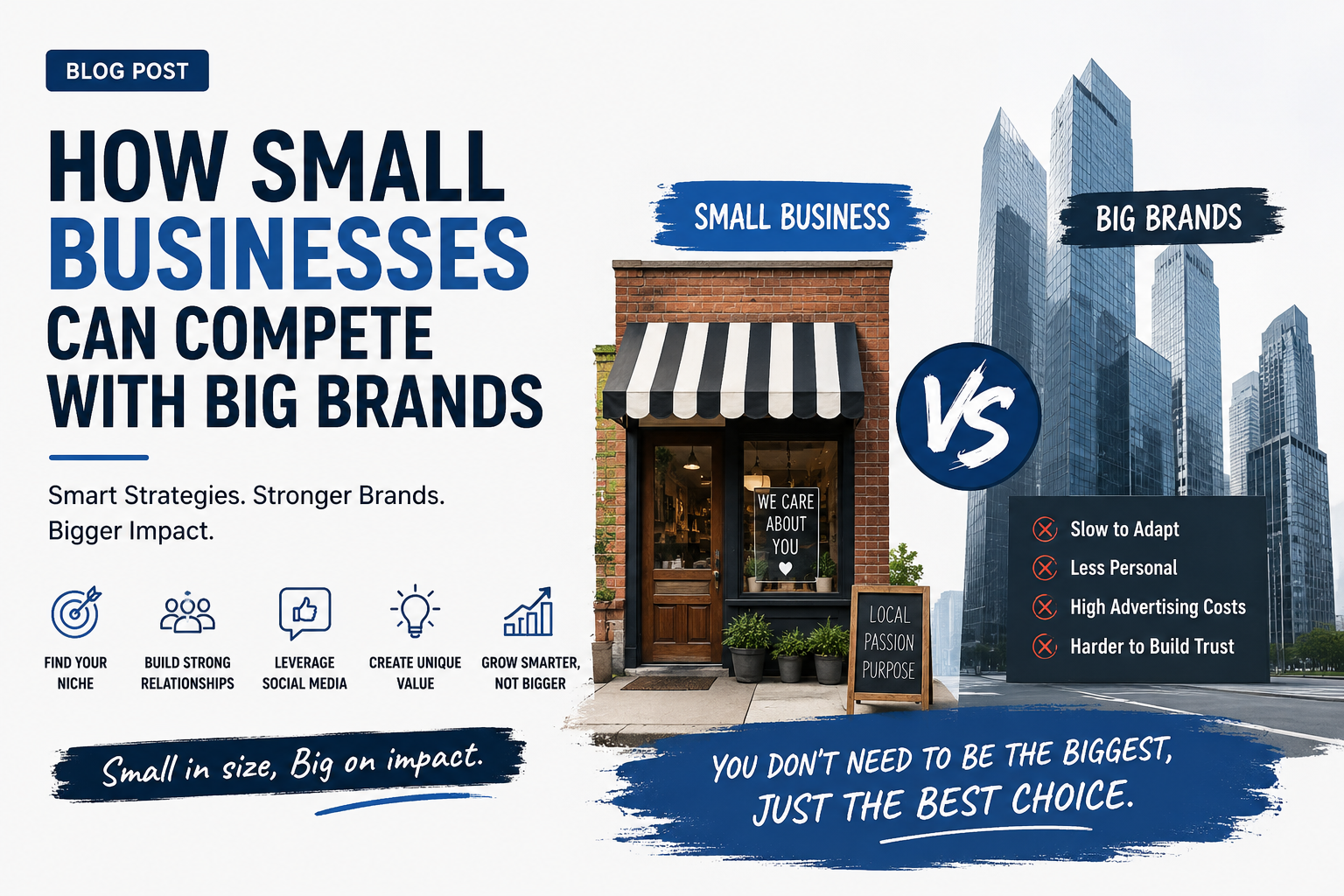
In today’s competitive marketplace, small businesses often face the challenge of standing out against well-established brands with larger budgets and greater resources. However, being small can actually be an advantage. Small businesses can move faster, build stronger customer relationships, and create unique experiences that larger companies often struggle to deliver.
1. Focus on a Specific Niche
Big brands usually target broad audiences. Small businesses can gain an advantage by specializing in a specific niche and becoming experts in that area.
For example, instead of selling general skincare products, a business could focus on organic skincare for sensitive skin. A niche audience is easier to attract, engage, and retain.
2. Build Strong Customer Relationships
Customers often choose small businesses because of the personal experience they receive.
Ways to strengthen relationships include:
- Responding quickly to customer inquiries
- Remembering customer preferences
- Offering personalized recommendations
- Providing exceptional after-sales support
People may forget a product, but they rarely forget a great customer experience.
3. Leverage Social Media Effectively
Social media has created a level playing field where businesses of any size can reach large audiences.
Focus on:
- Consistent posting
- Behind-the-scenes content
- Customer success stories
- Educational content
- Short-form videos
Authentic content often performs better than highly polished corporate advertisements.
4. Create a Strong Brand Identity
A professional logo, consistent colors, typography, and messaging help customers recognize and trust your business.
Your brand should clearly communicate:
- Who you are
- What you offer
- Why you’re different
- Why customers should choose you
Strong branding can make a small company appear much larger and more professional.
5. Use Content Marketing
Creating valuable content helps establish authority and attract potential customers.
Examples include:
- Blog articles
- Design tips
- Industry insights
- Tutorials
- Case studies
- Email newsletters
Helpful content builds trust before customers are ready to buy.
6. Highlight Your Unique Selling Proposition (USP)
Every small business should answer one important question:
“Why should customers choose us instead of a larger competitor?”
Your USP could be:
- Better customer service
- Faster delivery
- Specialized expertise
- Handmade products
- Local support
- Customized solutions
Communicate this advantage clearly in all marketing materials.
7. Encourage Customer Reviews
Positive reviews act as social proof and help build credibility.
Ask satisfied customers to leave reviews on:
- Google Business Profile
- Industry-specific platforms
Many consumers trust online reviews as much as personal recommendations.
8. Be Agile and Adapt Quickly
Large companies often require lengthy approval processes before making changes. Small businesses can react faster to trends, customer feedback, and market opportunities.
This flexibility allows small businesses to innovate and stay relevant.
9. Invest in Quality Design
First impressions matter. Professional design can significantly impact customer trust and purchasing decisions.
Invest in:
- Logo design
- Packaging design
- Social media graphics
- Website design
- Advertising creatives
Good design makes a business look credible and memorable.
10. Turn Customers Into Brand Advocates
Happy customers become your most effective marketers.
Encourage:
- Referrals
- User-generated content
- Testimonials
- Social media mentions
Word-of-mouth marketing remains one of the most powerful and cost-effective growth strategies.
Conclusion
Competing with big brands isn’t about having the largest budget—it’s about being smarter, more personal, and more focused. Small businesses that build strong customer relationships, create a memorable brand, and deliver exceptional value can successfully compete and thrive in any industry.
Remember: Big brands have scale, but small businesses have agility, authenticity, and the ability to create meaningful connections with customers. Those advantages can be more powerful than any advertising budget.