
Introduction
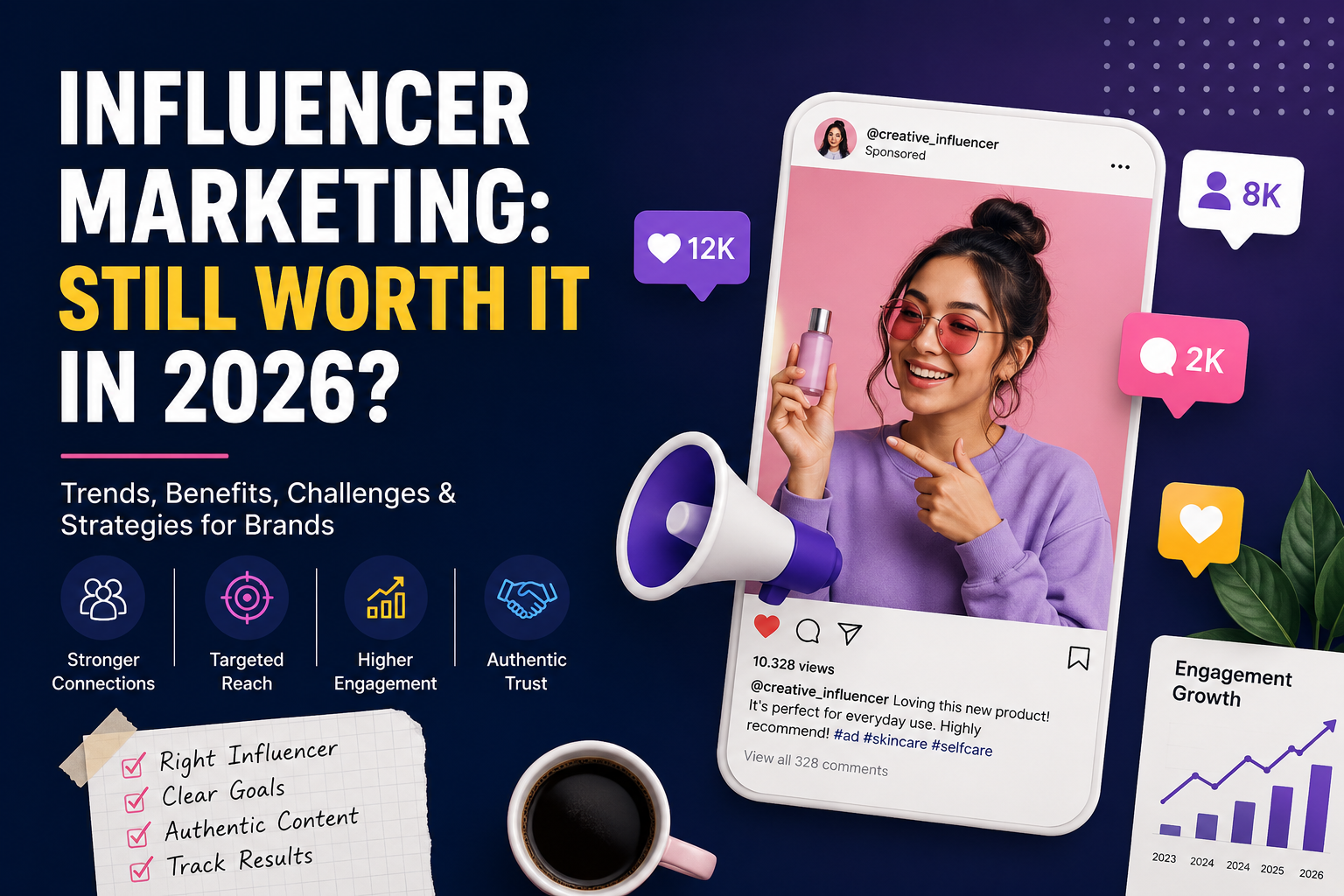
Influencer marketing has evolved dramatically over the past decade. What started as simple product endorsements from social media personalities has become a multi-billion-dollar industry. But as consumers become more aware of sponsored content and social media platforms continue to change, many businesses are asking a crucial question:
Is influencer marketing still worth investing in during 2026?
The short answer is yes—but only when done strategically.
The Evolution of Influencer Marketing
In the early days, brands focused mainly on celebrities and mega-influencers with millions of followers. Today, businesses are shifting toward micro-influencers and content creators who have smaller but highly engaged communities.
Consumers now value:
- Authentic recommendations
- Real experiences
- Transparent partnerships
- Community-driven content
This shift has transformed influencer marketing from a reach-focused strategy into a trust-focused strategy.
Why Influencer Marketing Still Works
1. People Trust People More Than Ads
Traditional advertisements often feel promotional. Influencers, on the other hand, build personal relationships with their audiences.
When an influencer genuinely recommends a product, followers are more likely to trust the recommendation than a standard advertisement.
2. Higher Engagement Rates
Many influencers generate:
- More comments
- More shares
- More saves
- More direct conversations
These interactions help brands build stronger customer relationships and improve visibility.
3. Better Audience Targeting
Brands can now partner with creators in highly specific niches:
- Fitness
- Beauty
- Technology
- Fashion
- Food
- Finance
- Travel
- Gaming
This allows businesses to reach audiences who are already interested in their products.
4. Content Creation Value
Influencers are no longer just promoters—they are content creators.
Brands often reuse influencer-generated content for:
- Social media ads
- Website banners
- Product pages
- Email campaigns
This provides additional value beyond direct sales.
The Biggest Changes in 2026
Rise of Micro and Nano Influencers
Many brands now prefer creators with:
- 1,000–10,000 followers (Nano)
- 10,000–100,000 followers (Micro)
Why?
Because these creators often have:
- Higher engagement rates
- Stronger community trust
- Lower collaboration costs
AI Influencers Are Growing
Virtual influencers powered by AI are becoming increasingly common.
Benefits include:
- Complete brand control
- Consistent messaging
- No scheduling conflicts
However, human creators still outperform AI influencers in authenticity and emotional connection.
Video Dominates Everything
Short-form video continues to dominate platforms like:
- TikTok
- YouTube
Brands focusing on video collaborations generally see stronger engagement than those relying solely on static posts.
Common Mistakes Brands Still Make
Choosing Reach Over Relevance
A creator with 20,000 highly engaged followers can outperform one with 2 million inactive followers.
Ignoring Audience Quality
Always evaluate:
- Engagement rate
- Comment quality
- Audience demographics
- Previous brand partnerships
Overly Scripted Promotions
Audiences quickly recognize forced endorsements.
The best influencer campaigns allow creators to communicate in their own voice.
Measuring Only Likes
Success should be measured using:
- Website traffic
- Leads generated
- Sales conversions
- Brand awareness
- Customer retention
When Influencer Marketing Is NOT Worth It
Influencer marketing may not be effective when:
- The product lacks a clear target audience
- Expectations are unrealistic
- Creators are chosen solely based on follower count
- Campaign goals are unclear
- Brands fail to track performance
Without strategy, influencer marketing becomes an expense rather than an investment.
Best Practices for 2026
To maximize results:
✅ Partner with niche creators
✅ Focus on long-term relationships instead of one-time promotions
✅ Prioritize engagement over follower count
✅ Use influencer-generated content in paid ads
✅ Track ROI using analytics tools
✅ Encourage authentic storytelling
✅ Test multiple creators before scaling campaigns
Conclusion
Influencer marketing is absolutely still worth it in 2026—but the rules have changed.
Success is no longer about partnering with the biggest influencer. It’s about finding the right creator, building authentic relationships, and delivering value to the audience.
Brands that prioritize trust, authenticity, and meaningful engagement will continue to see strong results, while those relying on outdated influencer strategies may struggle to achieve a positive return on investment.
In 2026, influencer marketing isn’t dying—it’s simply becoming smarter.