
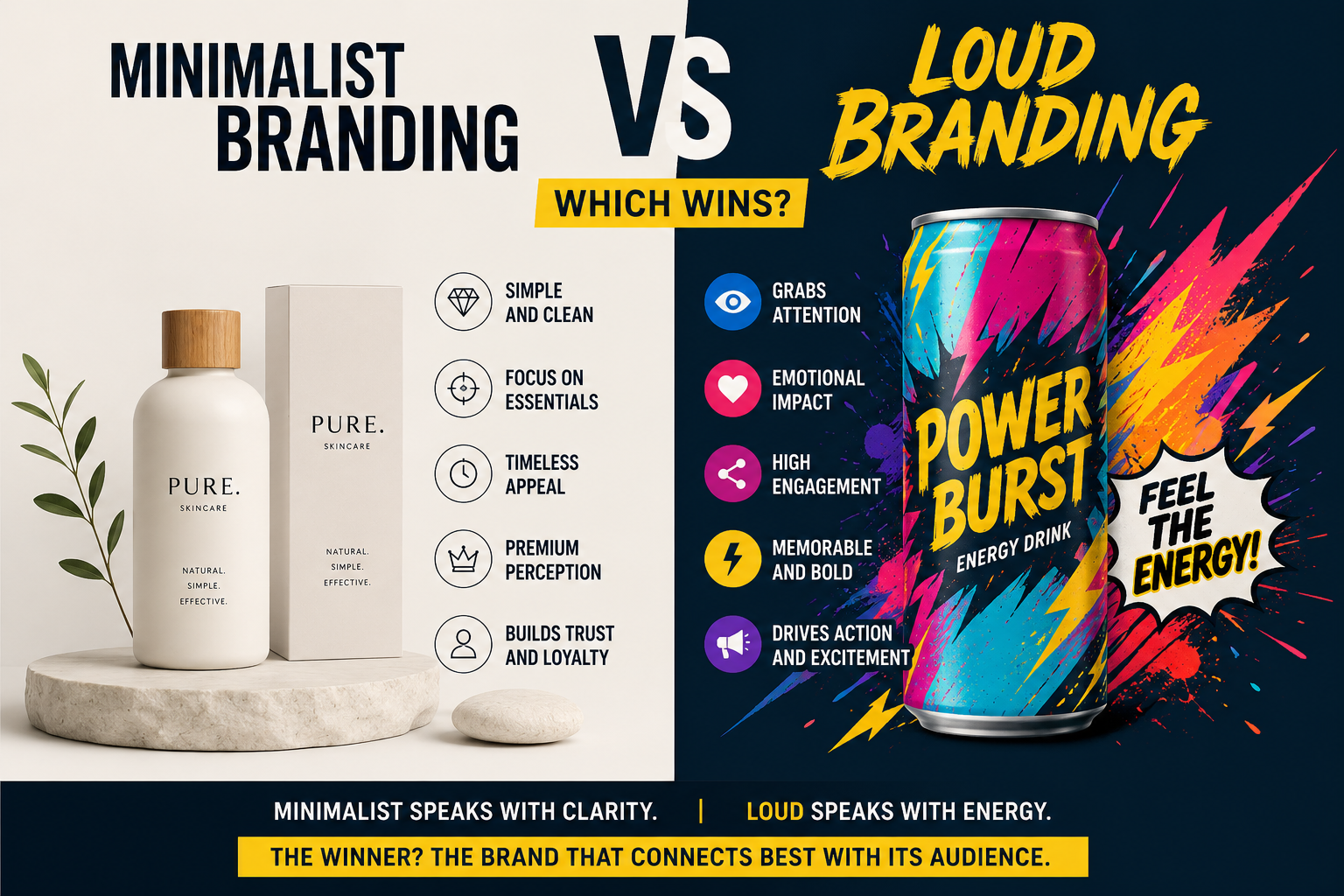
In today’s crowded marketplace, brands are constantly competing for one thing: attention. From sleek, clean designs to bold, colorful campaigns, businesses use different branding strategies to stand out. Two of the most popular approaches are Minimalist Branding and Loud Branding.
But which one actually wins?
The answer isn’t as simple as choosing one over the other. Both styles can be incredibly successful when used correctly. Let’s explore the strengths, weaknesses, and best use cases of each branding strategy.
What is Minimalist Branding?
Minimalist branding focuses on simplicity, clarity, and elegance. It removes unnecessary elements and highlights only what truly matters.
Key Characteristics:
- Clean layouts
- Limited color palettes
- Simple typography
- Plenty of white space
- Clear messaging
- Premium and sophisticated appearance
Why Brands Choose Minimalism
Modern consumers are overwhelmed with information. Minimalist branding cuts through the noise by presenting a clean and focused identity.
Benefits include:
- Improved brand recognition
- Better user experience
- Timeless design appeal
- Strong perception of quality
- Easier communication of core values
Examples of Minimalist Branding
Some of the world’s most successful brands embrace simplicity:
- Apple
- Tesla
- Nike
These brands use simple logos, clean packaging, and focused messaging to create a premium image.
What is Loud Branding?
Loud branding takes the opposite approach. It aims to capture attention instantly through bold visuals, vibrant colors, creative typography, and energetic messaging.
Key Characteristics:
- Bright color schemes
- Bold typography
- Dynamic visuals
- High-energy messaging
- Attention-grabbing campaigns
- Strong personality
Why Brands Choose Loud Branding
In highly competitive industries, being memorable is often more important than being subtle.
Benefits include:
- Instant attention
- Strong emotional impact
- High social media engagement
- Greater shareability
- Memorable brand identity
Examples of Loud Branding
Many successful brands use bold visual identities:
- Red Bull
- MTV
- Burger King
These brands thrive on strong personalities and highly recognizable visuals.
The Psychology Behind Both Approaches
Minimalist Branding Appeals To:
- Professionals
- Luxury consumers
- High-income buyers
- Tech enthusiasts
- Premium product shoppers
Minimalism creates feelings of:
- Trust
- Sophistication
- Exclusivity
- Quality
Loud Branding Appeals To:
- Younger audiences
- Entertainment-focused consumers
- Impulse buyers
- Social media users
- Trend-conscious shoppers
Loud branding creates feelings of:
- Excitement
- Energy
- Fun
- Urgency
Minimalist Branding: Pros and Cons
Pros
✔ Timeless appearance
✔ Premium brand perception
✔ Easier brand recognition
✔ Better user experience
✔ Stronger focus on the product
Cons
✖ May appear boring if executed poorly
✖ Can blend into competitors using similar styles
✖ Harder to stand out instantly
Loud Branding: Pros and Cons
Pros
✔ Captures attention immediately
✔ Highly memorable
✔ Great for social media
✔ Encourages audience engagement
✔ Strong emotional connection
Cons
✖ Can feel overwhelming
✖ Trends may become outdated quickly
✖ Risk of appearing unprofessional
✖ Difficult to maintain consistency
Which Industries Benefit Most from Minimalist Branding?
Minimalist branding often performs best in:
- Technology
- Luxury products
- Healthcare
- Finance
- Real estate
- Premium skincare
- High-end fashion
Customers in these industries value trust, simplicity, and professionalism.
Which Industries Benefit Most from Loud Branding?
Loud branding often works best in:
- Food and beverage
- Entertainment
- Gaming
- Sports
- Fashion for younger audiences
- Social media brands
- Consumer products
These industries rely heavily on excitement and emotional engagement.
The Rise of Hybrid Branding
Many modern brands are combining both approaches.
A brand may use:
- Minimalist packaging
- Bold advertising campaigns
Or:
- Clean website design
- Vibrant social media content
This hybrid strategy allows brands to maintain professionalism while still attracting attention.
What Consumers Want in 2026
Consumer behavior is changing.
People want:
- Authenticity
- Simplicity
- Strong visual experiences
The most successful brands are no longer choosing between minimalist and loud branding. Instead, they are strategically using elements of both.
Brands that understand when to be quiet and when to be bold are gaining the greatest competitive advantage.
So, Which Wins?
The real winner is not minimalist branding or loud branding.
The winner is the branding style that aligns with your audience, product, and business goals.
Choose Minimalist Branding if:
- You sell premium products.
- You want a timeless identity.
- Trust and professionalism are important.
Choose Loud Branding if:
- You target younger consumers.
- You need rapid attention.
- Social media visibility is a priority.
The strongest brands understand their audience deeply and build a visual identity that speaks directly to them.
Final Thoughts
Branding is more than colors, logos, and design trends. It’s about creating a memorable experience that people connect with emotionally.
Minimalist branding offers elegance, trust, and sophistication. Loud branding delivers excitement, energy, and visibility.
Rather than asking which style wins, businesses should ask:
“Which style best tells our story and resonates with our audience?”
Because in branding, the loudest brand doesn’t always win—and neither does the simplest. The brand that creates the strongest connection with its audience does.