
📌 Introduction
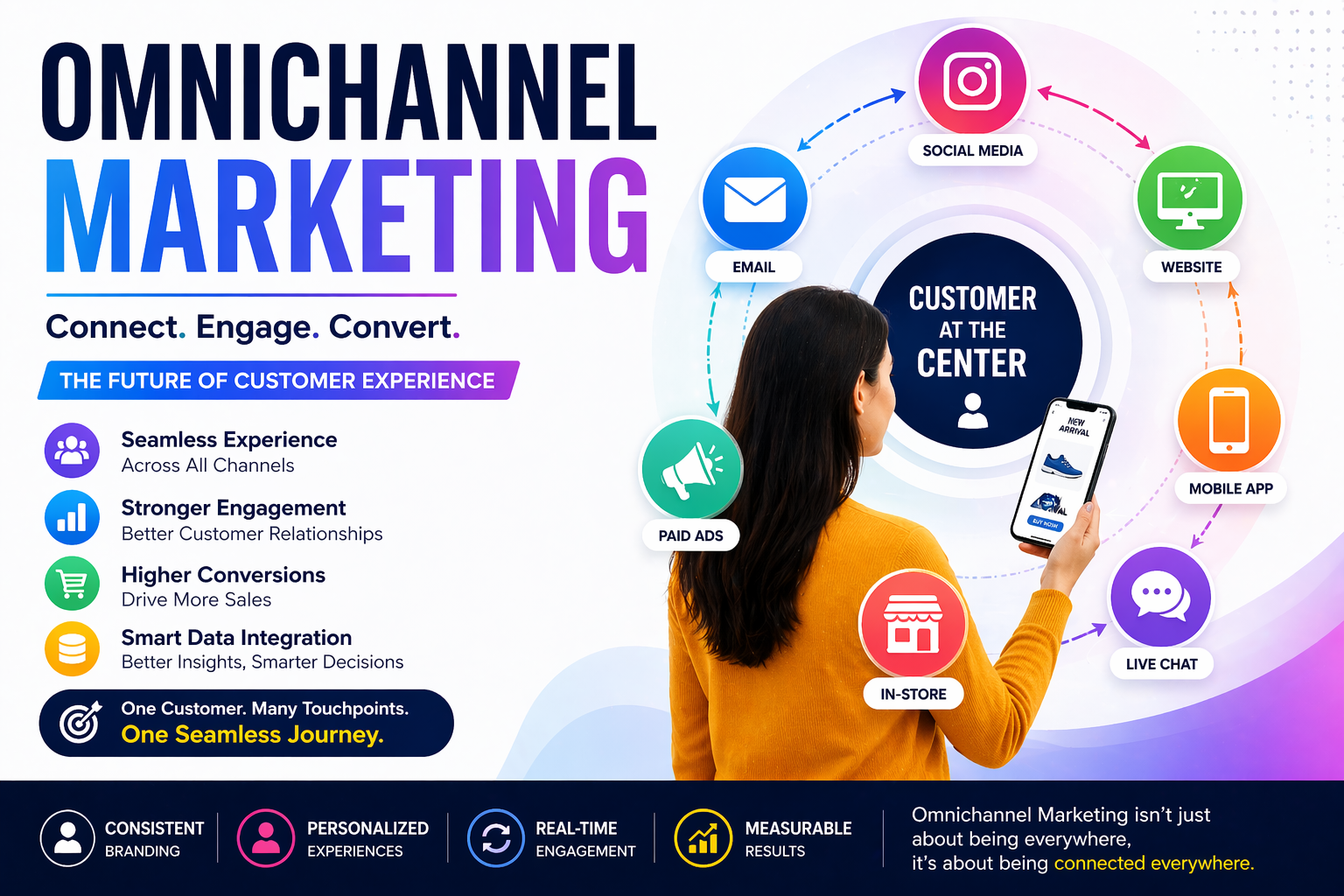
Today’s customers don’t stick to just one platform. They might discover your brand on Instagram, visit your website, and finally purchase from your store.
This is why omnichannel marketing has become essential in 2026.
It ensures a smooth, connected experience across all platforms, helping brands increase engagement, trust, and sales.
🔍 What Is Omnichannel Marketing?
Omnichannel marketing is a strategy that integrates all marketing channels to create a unified customer experience.
These channels include:
- Social media
- Websites
- Email marketing
- Physical stores
- Mobile apps
👉 The goal: Consistent experience everywhere
🚀 Why Omnichannel Marketing Matters
1. 🔄 Seamless Customer Journey
Customers can switch platforms without losing their experience.
2. 📈 Higher Conversion Rates
Consistent messaging increases trust and sales.
3. 🧠 Better Customer Understanding
Data from multiple channels gives deeper insights.
4. 💡 Strong Brand Presence
Your brand stays visible across all touchpoints.
🧠 Omnichannel vs Multichannel Marketing
| Feature | Omnichannel | Multichannel |
|---|---|---|
| Strategy | Integrated | Separate |
| Experience | Seamless | Fragmented |
| Data Usage | Connected | Isolated |
| Focus | Customer journey | Channels |
👉 Omnichannel focuses on customer experience, not just channels.
🧩 Key Components of Omnichannel Marketing
🔹 1. Unified Branding
Consistent colors, tone, and messaging across platforms.
🔹 2. Data Integration
Combine data from all channels for better insights.
🔹 3. Personalization
Show relevant content based on user behavior.
🔹 4. Cross-Platform Engagement
Connect social media, website, email, and offline channels.
🔹 5. Automation
Use tools to manage campaigns efficiently.
🛠️ How to Build an Omnichannel Strategy
1. 🎯 Understand Your Audience
Map customer behavior across platforms.
2. 📍 Identify Touchpoints
Where do customers interact with your brand?
3. 🔗 Integrate Channels
Connect all platforms for a seamless journey.
4. 📊 Use Data & Analytics
Track performance and improve continuously.
5. 🔄 Optimize Experience
Ensure smooth transitions between channels.
💡 Real-Life Example
A customer journey:
- Sees your ad on Instagram
- Visits your website
- Gets a retargeting email
- Purchases from your app
👉 This is omnichannel marketing in action.
⚠️ Common Mistakes to Avoid
- ❌ Inconsistent branding
- ❌ Disconnected platforms
- ❌ Ignoring customer data
- ❌ Poor mobile experience
- ❌ Lack of personalization
🔮 Future Trends (2026)
- 🤖 AI-driven personalization
- 🧍 Real-time customer tracking
- 🛍️ Unified online + offline shopping
- 🎥 Video-first omnichannel strategies
- 📊 Advanced data integration
🏁 Conclusion
Omnichannel marketing is no longer optional—it’s essential.
Brands that deliver a seamless experience across platforms will win customer trust and loyalty.
👉 Don’t just be present everywhere—be connected everywhere.