
Introduction
In today’s highly competitive marketplace, consumers are exposed to thousands of advertisements every day. With so much noise, businesses need more than just a good product or service to stand out—they need a strong visual identity. Visual identity is the face of a brand, helping customers recognize, remember, and trust a business instantly.
From logos and colors to typography and packaging, every visual element plays a crucial role in shaping how people perceive a brand. Companies like Apple Inc., Nike, and Coca-Cola have built powerful visual identities that are recognized worldwide.
This blog explores why visual identity matters, how it influences customer behavior, and how businesses can leverage it to strengthen their marketing efforts.
What is Visual Identity?
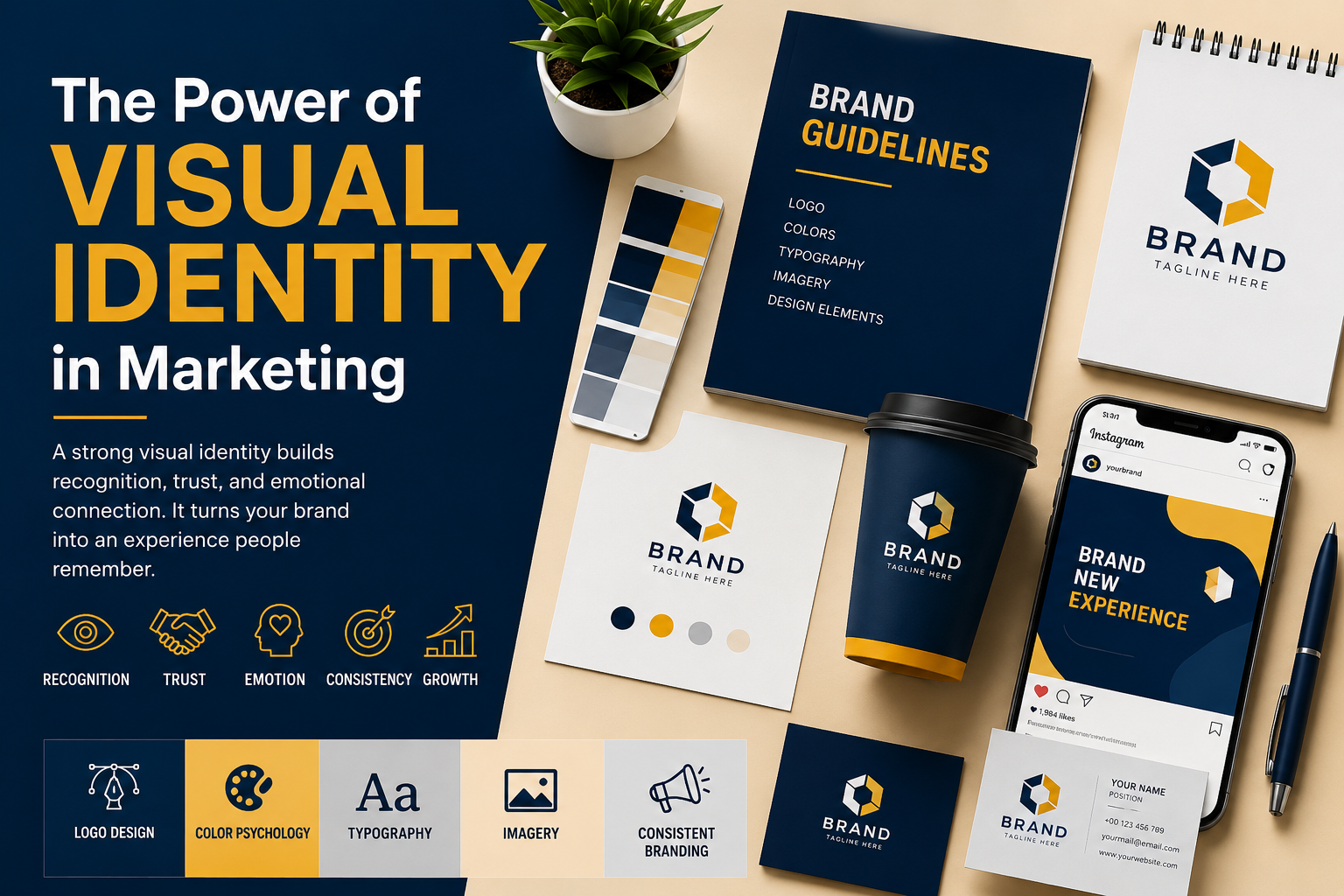
Visual identity refers to all the visual elements that represent a brand. It is the visual language through which a company communicates its personality, values, and mission.
Key components of visual identity include:
- Logo Design
- Brand Colors
- Typography
- Packaging Design
- Photography Style
- Graphic Elements
- Social Media Visuals
- Website Design
- Marketing Materials
Together, these elements create a consistent brand image that customers can easily recognize.
Why Visual Identity Matters in Marketing
1. Creates a Strong First Impression
Research shows that people form opinions about a brand within seconds. Before reading a headline or learning about a product, customers notice how a brand looks.
A professionally designed visual identity helps:
- Capture attention instantly
- Communicate professionalism
- Build credibility
- Create positive brand perception
A weak or inconsistent visual identity can make even great products appear unreliable.
2. Increases Brand Recognition
One of the biggest goals of marketing is making your brand memorable.
Think about:
- The golden arches of McDonald’s
- The swoosh logo of Nike
- The red-and-white branding of Coca-Cola
People recognize these brands instantly because their visual identities are consistent across all platforms.
The more consistently customers see your visual elements, the easier it becomes for them to remember your brand.
3. Builds Trust and Credibility
Customers prefer buying from brands they trust.
A cohesive visual identity signals:
- Professionalism
- Reliability
- Consistency
- Attention to detail
When a business uses different logos, colors, or design styles across platforms, it can confuse customers and weaken trust.
Consistency creates confidence.
4. Differentiates Your Brand from Competitors
In crowded industries, visual identity can become a major competitive advantage.
For example:
Two skincare brands may offer similar products, but the brand with better packaging, stronger branding, and premium visuals often attracts more customers.
Visual identity helps businesses:
- Stand out on shelves
- Gain attention online
- Create a unique market position
- Increase perceived value
5. Influences Customer Emotions
Colors, typography, and imagery trigger emotional responses.
Examples:
- Blue = Trust and Security
- Green = Nature and Health
- Red = Energy and Excitement
- Black = Luxury and Sophistication
- Yellow = Optimism and Happiness
Successful brands use color psychology strategically to influence customer perception.
The Role of Visual Identity in Digital Marketing
Social Media Marketing
Social media is highly visual.
Brands with consistent visual identity experience:
- Higher engagement
- Better brand recall
- More followers
- Stronger audience loyalty
Consistent Instagram posts, stories, reels, and advertisements create a recognizable brand presence.
Website Marketing
Your website is often the first interaction customers have with your business.
Strong visual identity improves:
- User experience
- Brand perception
- Conversion rates
- Customer trust
A visually consistent website makes visitors more likely to stay and explore.
Paid Advertising
Whether running Facebook Ads, Instagram Ads, or Google Display Ads, visual identity plays a crucial role in performance.
Strong visuals help:
- Increase click-through rates
- Improve ad recall
- Enhance campaign effectiveness
- Strengthen brand awareness
Key Elements of a Powerful Visual Identity
Logo
A logo should be:
- Simple
- Memorable
- Scalable
- Timeless
It serves as the foundation of your visual identity.
Color Palette
Choose 2–5 primary brand colors that align with your brand personality.
Examples:
- Luxury brands often use black and gold.
- Healthcare brands prefer blue and white.
- Eco-friendly brands use green tones.
Typography
Fonts communicate personality.
- Serif Fonts = Traditional & Premium
- Sans Serif Fonts = Modern & Clean
- Script Fonts = Elegant & Creative
Using consistent typography strengthens brand recognition.
Imagery
Photography and graphics should maintain a consistent style.
For example:
- Luxury brands use high-end photography.
- Fitness brands use energetic visuals.
- Organic brands use natural imagery.
Packaging Design
Packaging acts as a silent salesperson.
Well-designed packaging:
- Attracts attention
- Communicates quality
- Enhances customer experience
- Increases purchase likelihood
Common Visual Identity Mistakes
Inconsistent Branding
Using different logos, colors, or fonts across platforms creates confusion.
Following Every Trend
Trendy designs may look outdated quickly.
Focus on timeless branding.
Poor Quality Design
Low-resolution graphics and amateur designs damage credibility.
Ignoring Brand Guidelines
Without clear guidelines, maintaining consistency becomes difficult.
How Small Businesses Can Build a Strong Visual Identity
Step 1: Define Your Brand Personality
Ask:
- What values does my brand represent?
- How do I want customers to feel?
- What makes my business unique?
Step 2: Create a Professional Logo
Invest in a logo that reflects your brand and works across multiple platforms.
Step 3: Develop Brand Guidelines
Include:
- Logo usage
- Color codes
- Typography
- Photography style
- Design standards
Step 4: Maintain Consistency
Apply your visual identity across:
- Website
- Social Media
- Packaging
- Business Cards
- Advertisements
- Email Marketing
Future of Visual Identity in Marketing
As AI, digital platforms, and consumer expectations evolve, visual identity will become even more important.
Emerging trends include:
- AI-powered brand design
- Motion branding
- Interactive visual experiences
- Personalized brand visuals
- Minimalist luxury aesthetics
However, one principle remains unchanged:
Brands that are visually consistent, recognizable, and emotionally engaging will continue to win customer attention and loyalty.
Conclusion
Visual identity is far more than just a logo—it is the foundation of how customers perceive and remember a brand. A strong visual identity helps businesses build trust, improve recognition, create emotional connections, and stand out from competitors.
In a world where attention is limited and competition is fierce, investing in a powerful visual identity is no longer optional—it is a critical marketing strategy.
Businesses that prioritize branding and visual consistency today will be the brands customers remember tomorrow.
Visual identity isn’t just design. It’s marketing, communication, trust, and business growth combined into one powerful asset.