
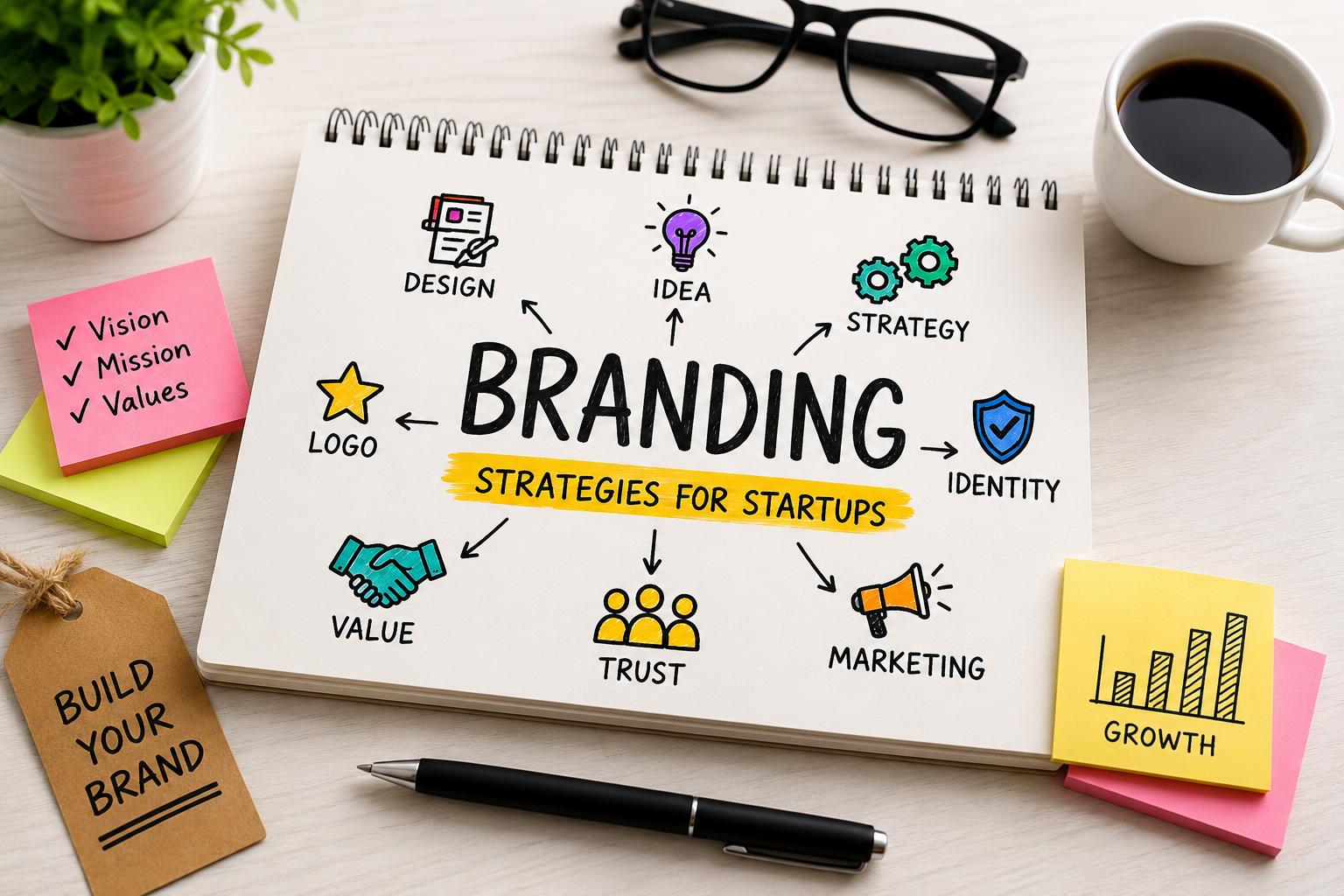
In today’s competitive market, startups need more than just a good product to succeed. Strong branding helps businesses stand out, build trust, and create long-term customer loyalty. Successful startups understand that branding is not only about logos and colors — it is about creating a memorable experience and emotional connection with the audience.
Here are the top branding strategies used by successful startups in 2026.
1. Building a Clear Brand Identity
Successful startups create a strong and consistent identity from the beginning. This includes:
- Unique logo design
- Consistent color palette
- Clear typography
- Brand voice and tone
- Memorable tagline
A strong identity helps customers recognize the brand instantly across social media, websites, packaging, and advertisements.
Example: Minimal and clean branding is currently trending because it looks modern, premium, and trustworthy.
2. Focusing on Storytelling
People connect with stories more than products. Startups use storytelling to explain:
- Why the brand was created
- The problem it solves
- The mission behind the business
- Real customer experiences
Emotional storytelling creates stronger customer relationships and improves brand recall.
3. Using Social Media as a Branding Tool
Modern startups treat social media as their main branding platform. They focus on:
- Short-form videos
- Trending reels
- Meme marketing
- Behind-the-scenes content
- Interactive posts
Consistent and creative content helps startups grow organically and attract loyal followers.
4. Creating Customer-Centered Branding
Successful brands understand their audience deeply. They study:
- Customer behavior
- Interests and lifestyle
- Buying habits
- Pain points
This helps them design branding that feels personal and relatable.
5. Maintaining Visual Consistency
Consistency builds trust. Top startups maintain the same visual style across:
- Product packaging
- Website design
- Instagram posts
- Advertisements
- Email marketing
Consistent branding makes the business look professional and reliable.
6. Leveraging Influencer Marketing
Many startups collaborate with influencers to increase visibility and credibility. Micro-influencers are especially popular because they often have highly engaged audiences.
Influencer partnerships help brands:
- Reach targeted customers
- Build social proof
- Increase trust quickly
7. Prioritizing User Experience
Branding is not just visual — it also includes customer experience. Successful startups focus on:
- Easy website navigation
- Fast customer support
- Smooth ordering process
- Attractive packaging
- Personalized communication
Positive experiences turn customers into loyal brand advocates.
8. Using AI-Powered Marketing
AI tools are transforming branding and advertising in 2026. Startups now use AI for:
- Personalized ads
- Content creation
- Product visualization
- Customer analysis
- Automated marketing campaigns
AI helps startups create smarter and more targeted branding strategies.
9. Building Community Instead of Just Customers
The strongest brands create communities around their products. Startups engage audiences through:
- Online groups
- Interactive campaigns
- User-generated content
- Brand challenges
- Exclusive events
Community-driven branding increases customer loyalty and long-term growth.
10. Keeping Branding Simple and Authentic
Modern consumers prefer authentic brands over overly polished marketing. Successful startups focus on:
- Honest communication
- Realistic advertising
- Transparent messaging
- Human-centered content
Simple and genuine branding often performs better than complicated promotional campaigns.