
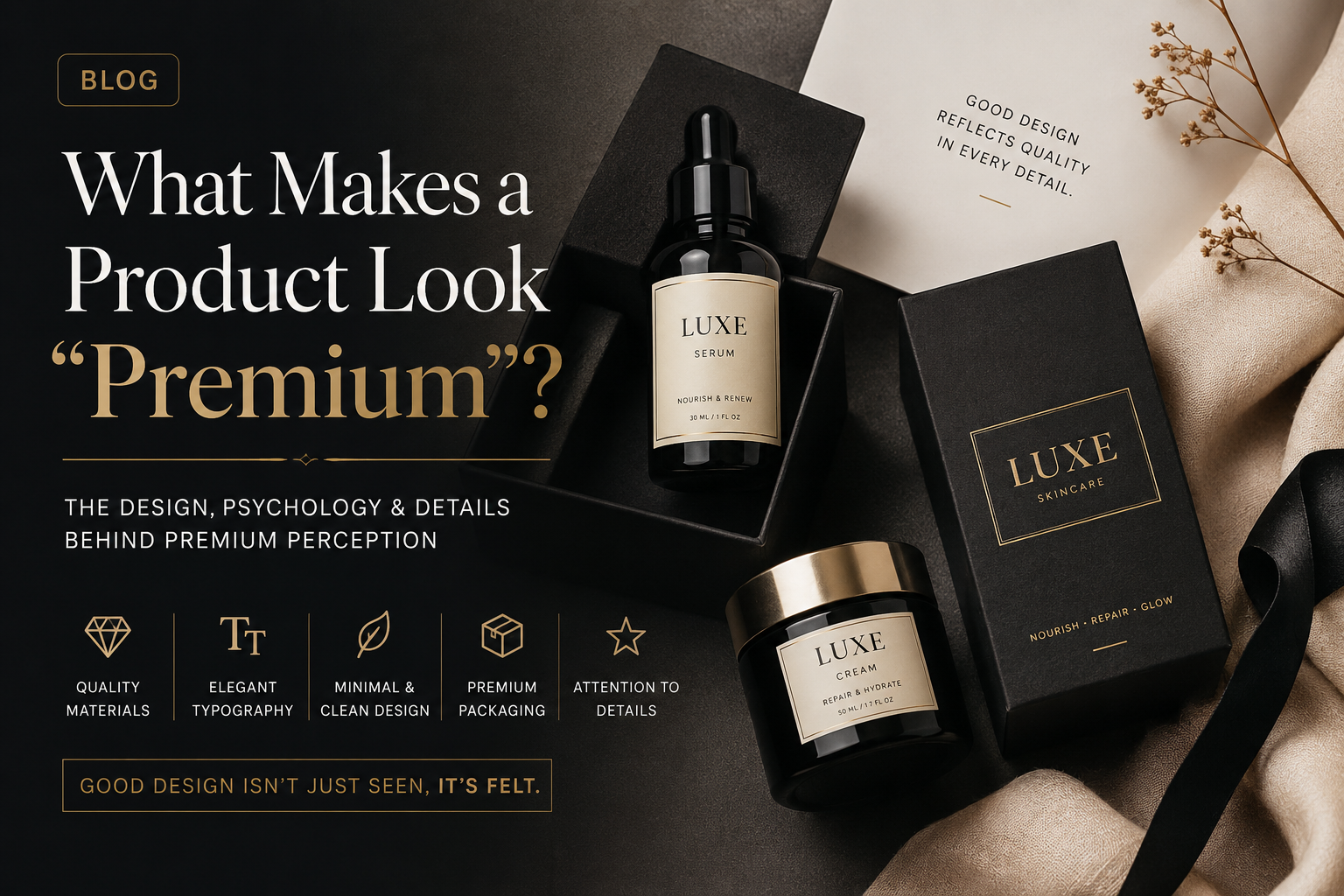
The Psychology of Luxury Design and Premium Branding
In today’s competitive market, customers often decide whether a product is premium within seconds of seeing it. Before they touch it, use it, or even read its features, they have already formed an opinion based on its appearance, presentation, and branding.
But what exactly makes a product look premium?
The answer goes far beyond expensive materials or high prices. Premium products are carefully designed to communicate quality, trust, exclusivity, and value. Whether it’s a luxury watch, a smartphone, a skincare bottle, or a coffee package, the principles behind premium design remain remarkably similar.
Let’s explore the key elements that make a product look premium and why they influence consumer perception.
1. Simplicity Creates Sophistication
One of the biggest misconceptions in design is that adding more elements makes a product look more valuable.
In reality, premium brands often embrace simplicity.
Luxury products avoid unnecessary graphics, excessive text, and visual clutter. Instead, they focus on clean layouts, balanced spacing, and intentional design choices.
Think about high-end technology brands, luxury fashion labels, or premium cosmetic packaging. Most feature minimal designs that allow the product itself to become the hero.
Why It Works
Simplicity communicates confidence. It suggests that the product doesn’t need flashy visuals to attract attention because its quality speaks for itself.
2. High-Quality Typography Matters
Typography is one of the most overlooked elements in premium branding.
The choice of fonts can instantly affect how customers perceive a product.
Premium brands typically use:
- Elegant serif fonts
- Modern sans-serif typefaces
- Consistent font hierarchy
- Balanced spacing between letters
Poor typography can make even an expensive product appear cheap, while well-crafted typography can elevate the perceived value of a simple package.
Why It Works
Consumers subconsciously associate professional typography with professionalism, trustworthiness, and quality.
3. Strategic Use of Color Psychology
Color plays a major role in shaping brand perception.
Different colors communicate different emotions and levels of sophistication.
Common Premium Color Choices
Black
- Luxury
- Authority
- Exclusivity
Gold
- Prestige
- Wealth
- Success
White
- Purity
- Simplicity
- Elegance
Navy Blue
- Trust
- Professionalism
- Reliability
Dark Green
- Wealth
- Heritage
- Sustainability
Premium brands often use limited color palettes rather than overwhelming customers with too many colors.
Why It Works
A refined color palette creates consistency and strengthens brand identity.
4. Premium Materials and Finishes
The physical feel of a product strongly influences its perceived value.
Premium products often incorporate:
- Matte finishes
- Soft-touch coatings
- Embossing
- Foil stamping
- Textured packaging
- High-quality materials
These tactile experiences create a stronger emotional connection between the customer and the product.
Why It Works
People naturally associate durability and craftsmanship with quality.
5. Attention to Detail
Premium brands obsess over details.
This includes:
- Precise alignment
- Consistent spacing
- Perfect printing quality
- Thoughtful packaging
- High-resolution imagery
Customers may not consciously notice these details, but they immediately notice when they’re missing.
Why It Works
Attention to detail signals professionalism and craftsmanship.
6. Professional Product Photography
Even the most beautifully designed product can appear inexpensive if photographed poorly.
Premium product photography focuses on:
- Controlled lighting
- Clean backgrounds
- Sharp image quality
- Luxury styling
- Professional composition
High-end brands invest heavily in visual presentation because images often create the first impression.
Why It Works
Consumers equate visual quality with product quality.
7. Strong Brand Identity
A premium product is rarely successful without strong branding.
Premium brands maintain consistency across:
- Logo design
- Packaging
- Website
- Advertising
- Social media
Every customer touchpoint reinforces the same message and visual identity.
Why It Works
Consistency builds trust and increases perceived value.
8. Exclusive and Limited Availability
Premium products often feel more desirable because they appear exclusive.
Brands create exclusivity through:
- Limited editions
- Special collections
- Premium memberships
- Invitation-only access
- Scarcity marketing
Why It Works
People naturally value things that seem rare or difficult to obtain.
9. Exceptional Packaging Design
Packaging is often called the silent salesperson.
Premium packaging creates an experience before the product is even used.
Characteristics include:
- Clean structure
- Quality materials
- Elegant finishes
- Organized presentation
- Memorable unboxing experience
Why It Works
Customers associate premium packaging with premium products.
10. Emotional Storytelling
Premium brands don’t simply sell products.
They sell:
- Aspirations
- Status
- Identity
- Lifestyle
- Experiences
A luxury watch may represent success.
A premium coffee brand may represent sophistication.
A high-end skincare product may represent confidence and self-care.
Why It Works
People buy emotionally and justify logically.
Real-World Examples of Premium Design
Many of the world’s most successful brands follow these principles consistently.
Examples include:
- Apple Inc.
- Mercedes-Benz
- Rolex
- Chanel
- Louis Vuitton
Although they operate in different industries, they all focus on simplicity, consistency, quality, and emotional branding.
Final Thoughts
Making a product look premium isn’t about adding more design elements or increasing the price. It’s about creating a perception of quality through thoughtful design decisions, strong branding, exceptional presentation, and attention to detail.
The most successful premium brands understand that customers don’t just purchase products—they purchase trust, status, emotion, and experience.
When simplicity meets craftsmanship and storytelling meets design, a product transforms from ordinary to premium.
Remember: Premium isn’t about being expensive. Premium is about being perceived as valuable.