
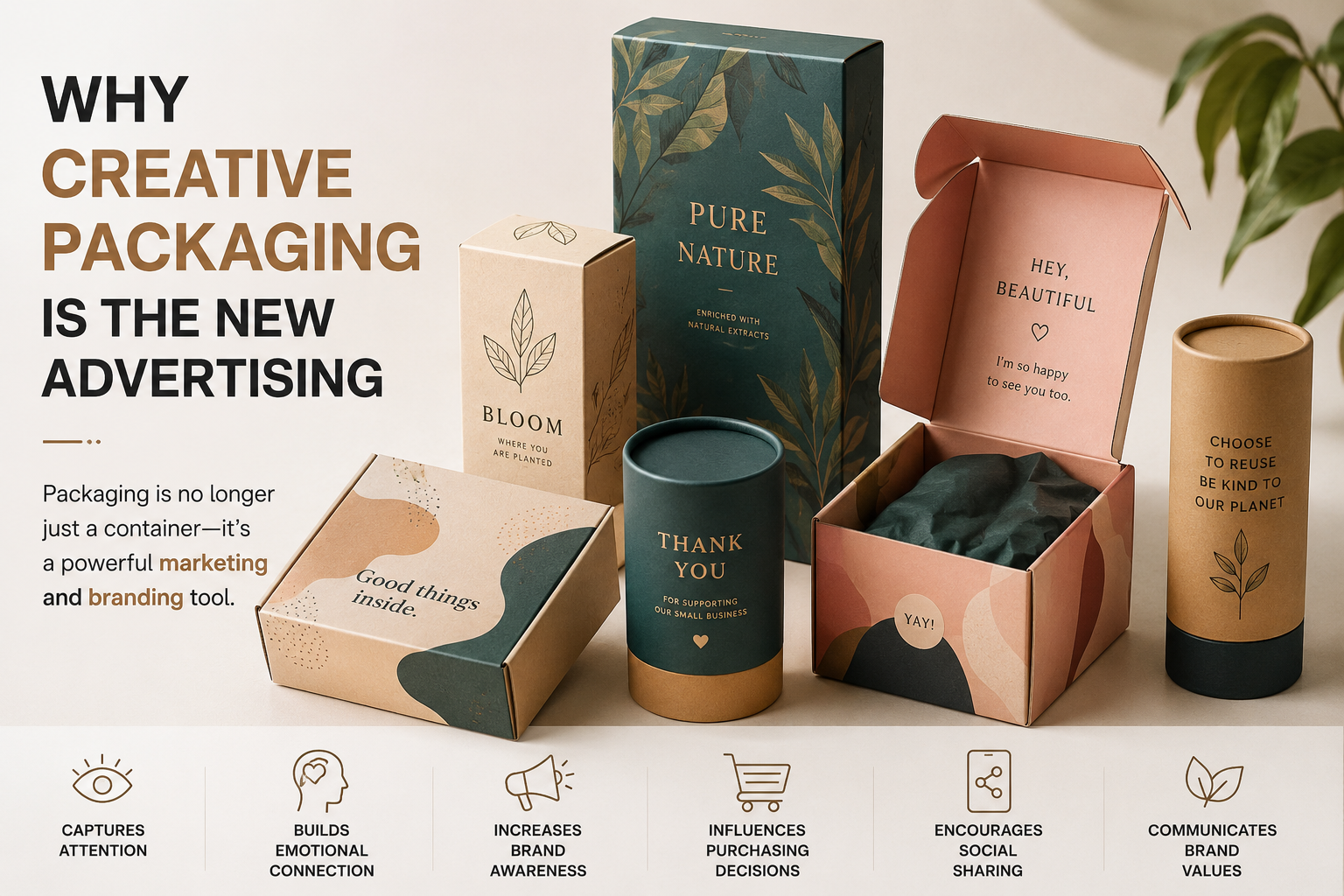
In today’s crowded marketplace, brands are competing for something more valuable than money—attention. Traditional advertising channels are becoming increasingly saturated, consumers are exposed to thousands of marketing messages daily, and digital ad fatigue is at an all-time high. As a result, brands are looking for innovative ways to stand out. One of the most powerful yet often overlooked marketing tools is creative packaging.
Packaging is no longer just a protective layer around a product. It has evolved into a brand’s silent salesperson, a storytelling medium, and a powerful advertising platform. In many cases, the packaging itself creates the first impression long before a customer experiences the product.
The Evolution of Packaging
Traditionally, packaging served three primary purposes:
- Protect the product
- Provide information
- Facilitate transportation
Today, packaging has become much more than functional. It is now a crucial component of branding and customer experience. Brands invest heavily in packaging design because they understand that consumers often make purchasing decisions based on visual appeal and emotional connection.
A well-designed package can communicate quality, trust, luxury, sustainability, and innovation—all within a few seconds.
Packaging as a Silent Salesperson
Imagine walking through a supermarket aisle filled with hundreds of similar products. What makes you stop and look?
The answer is often the packaging.
Creative packaging acts as a silent salesperson by:
- Capturing attention instantly
- Communicating brand values
- Creating curiosity
- Influencing purchasing decisions
- Differentiating products from competitors
Consumers may never see a brand’s online ads, but they will see its packaging when shopping. This makes packaging one of the most direct forms of advertising available.
First Impressions Matter
Research consistently shows that consumers form opinions about products within seconds. Packaging plays a significant role in shaping those opinions.
Elements such as:
- Color
- Typography
- Material
- Shape
- Texture
- Visual hierarchy
all influence how a product is perceived.
For example:
- Black and gold packaging often suggests luxury.
- Minimalist designs communicate sophistication.
- Bright colors create excitement and energy.
- Eco-friendly materials convey sustainability.
A strong first impression can be the difference between a purchase and a missed opportunity.
The Rise of Social Media and Unboxing Culture
Social media has transformed packaging into a shareable experience.
Platforms like Instagram, TikTok, and YouTube have made “unboxing videos” incredibly popular. Consumers now share their experiences with products online, and attractive packaging often becomes the star of the content.
When packaging is visually appealing, customers naturally become brand ambassadors by posting:
- Unboxing videos
- Product photos
- Reviews
- Reels and Shorts
This user-generated content provides free advertising and significantly expands brand reach.
A memorable package can generate thousands—or even millions—of impressions without spending additional advertising dollars.
Packaging Creates Emotional Connections
People rarely buy products based solely on logic. Emotions play a major role in purchasing decisions.
Creative packaging helps brands tell stories and create emotional connections.
Examples include:
- Personalized messages
- Premium textures
- Sustainable materials
- Unique opening experiences
- Limited-edition packaging
When customers feel something positive during the purchasing experience, they are more likely to remember the brand and become repeat buyers.
Packaging Enhances Brand Recognition
Strong brands are instantly recognizable.
Think about iconic products around the world. Their packaging alone often identifies the brand before the logo is even noticed.
Consistent packaging helps:
- Increase brand recall
- Build trust
- Strengthen brand identity
- Improve customer loyalty
Over time, consumers begin associating specific colors, shapes, and design elements with a particular brand.
Sustainability as a Marketing Advantage
Modern consumers care about environmental responsibility.
Eco-friendly packaging is no longer just a trend—it’s an expectation.
Brands that use:
- Recyclable materials
- Biodegradable packaging
- Minimal waste designs
- Reusable containers
often gain a competitive advantage.
Sustainable packaging communicates that a brand is responsible, modern, and customer-focused. This positive perception acts as a powerful form of advertising and influences purchasing decisions.
Premium Packaging Increases Perceived Value
Consumers often judge product quality based on packaging quality.
Luxury brands understand this principle extremely well. Premium packaging materials, elegant finishes, and thoughtful design create a perception of exclusivity.
Features such as:
- Embossing
- Foil stamping
- Magnetic closures
- Soft-touch finishes
- Custom inserts
can significantly increase perceived value, allowing brands to command higher prices.
In many cases, customers are willing to pay more simply because the packaging makes the product feel premium.
Packaging Differentiates Brands in Competitive Markets
Many industries are filled with similar products offering nearly identical features.
Creative packaging helps brands stand out by:
- Creating a unique identity
- Highlighting product benefits
- Improving shelf visibility
- Making products memorable
When consumers are faced with multiple options, packaging often becomes the deciding factor.
Brands that invest in innovative packaging gain an important competitive edge.
The Cost-Effective Advertising Channel
Unlike digital ads, which require ongoing spending, packaging is a one-time investment that continues working throughout the product’s lifecycle.
Every package:
- Sits on store shelves
- Appears in customer homes
- Travels through delivery networks
- Shows up in social media content
This makes packaging one of the most cost-effective forms of advertising available.
The return on investment can be substantial, especially when packaging encourages social sharing and repeat purchases.
The Future of Packaging Marketing
The future of packaging is becoming increasingly interactive and personalized.
Emerging trends include:
- QR codes linked to exclusive content
- Augmented reality experiences
- Smart packaging technology
- Personalized packaging designs
- Interactive storytelling
These innovations blur the line between packaging and advertising, creating deeper engagement with consumers.
As technology advances, packaging will continue to evolve into a more powerful marketing tool.
Conclusion
Creative packaging is no longer just a container—it is a strategic marketing asset. In a world where consumers are overwhelmed by advertisements, packaging offers brands a unique opportunity to capture attention, tell stories, build emotional connections, and generate organic promotion.
The brands that understand this shift are transforming packaging into a powerful advertising channel that works 24/7. From increasing perceived value and strengthening brand identity to driving social media engagement and customer loyalty, creative packaging has become one of the most effective forms of modern advertising.
As competition continues to grow, businesses that invest in innovative packaging will not only attract more customers but also create memorable experiences that turn ordinary products into extraordinary brands.
Creative packaging isn’t replacing advertising—it is becoming advertising. 🚀